A Walk in the Wild: printable card set
A sample of 4 cards. The full set of 50 comes with the collection. Back
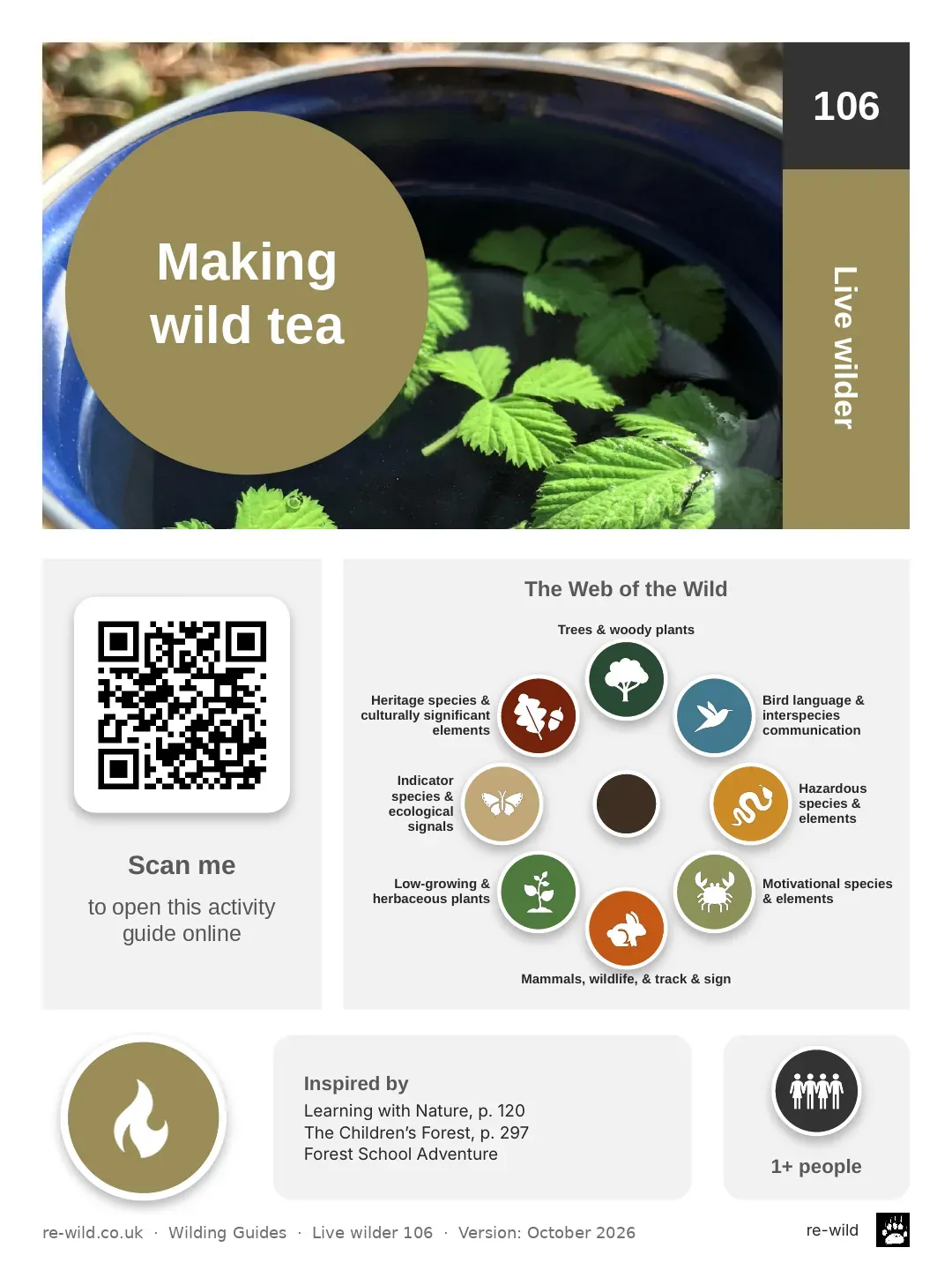
Live wilderMaking wild tea

Step by step

  1. Choose one plant to start with. Good choices for beginners include young nettle tops in spring, lime blossom or meadowsweet in summer, rosehips in autumn, and pine needles from Scots pine in winter.
  2. Research it first with a good field guide, and ideally with someone who knows it well, so you can identify it with complete certainty and know its look-alikes.
  3. Gather a small amount from a clean place away from roads, dog walking routes and sprayed fields, taking only a little from each plant.
  4. Rinse what you have gathered in clean drinking water.
  5. Put a small handful of leaves or flowers, or 4 or 5 split rosehips, in a mug and pour over freshly boiled water.
  6. Leave to steep for 5 minutes, then strain if needed. Rosehip tea must be strained through a fine cloth or coffee filter to remove the irritating hairs. Let it cool a little and sip, adding honey if you like.
The full Wilding activity guide (what you need, safety, variations and questions to wonder about): re-wild.co.uk/g/making-wild-tea/
A Walk in the Wild · re-wild.co.uk
Live wilderGathering foliage & flowers

Step by step

  1. Identify the foliage or flowers you want to gather, using a field guide to confirm the species with confidence before touching or picking anything. For ordinary leaves, pinch or cut the stem cleanly just above a leaf node, taking only a few from any 1 plant so it can continue to grow well. For stinging plants such as nettles, wear gloves and grip the stem firmly and confidently, since a light, hesitant touch is more likely to result in a sting.
  2. Place your gathered foliage or flowers into a breathable bag or basket, keeping different species separated if you plan to identify or use them differently later.
The full Wilding activity guide (what you need, safety, variations and questions to wonder about): re-wild.co.uk/g/gathering-foliage-and-flowers/
A Walk in the Wild · re-wild.co.uk
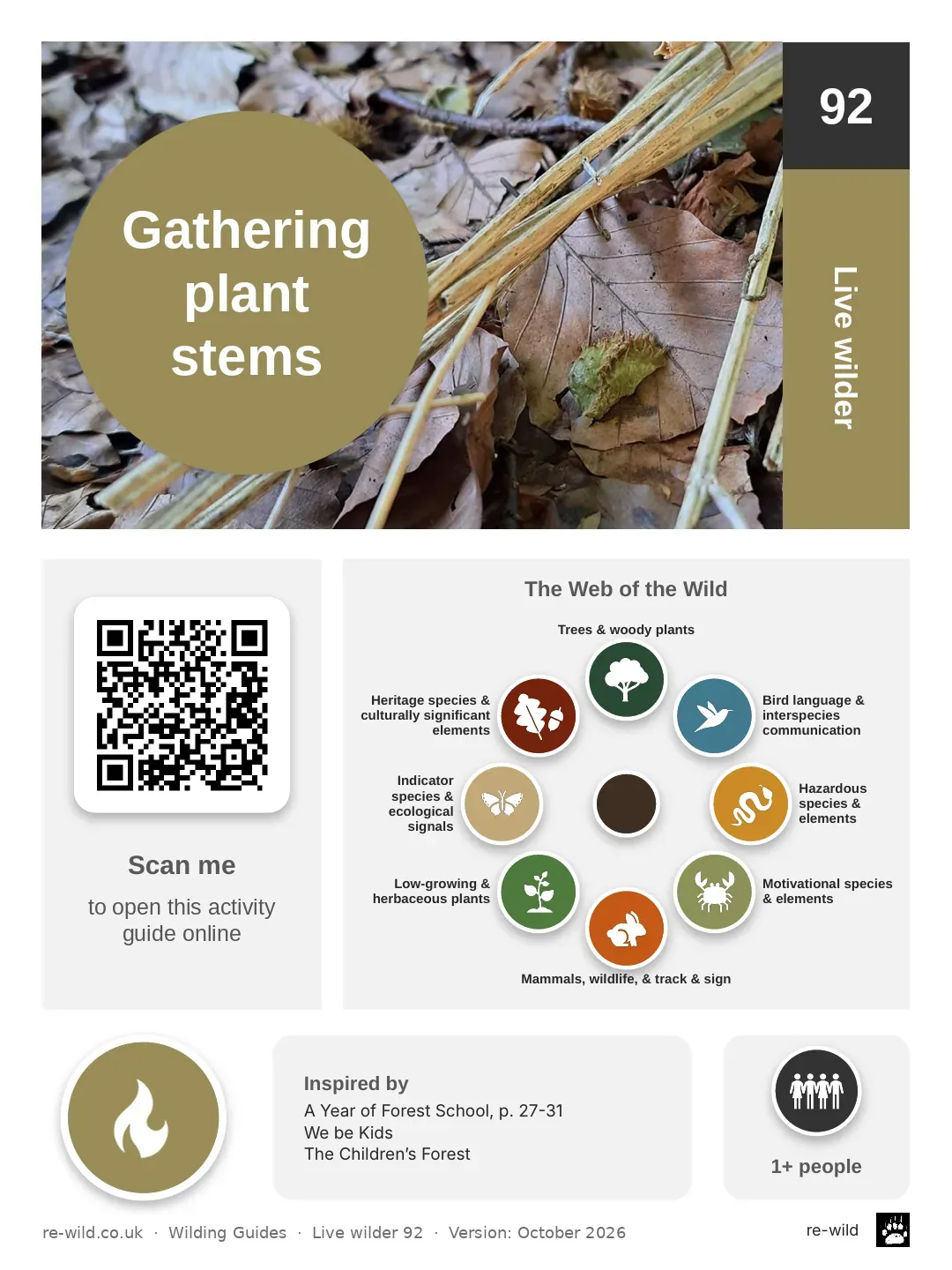
Live wilderGathering plant stems

Step by step

  1. Before starting this activity, research bramble from an identification and ecological perspective, using field guides and, ideally, getting to know the plant alongside a suitably qualified botany elder until you feel confident identifying it. Wearing gloves, locate a bramble stem of the length you need. Working from as close to the base of the stem as you can, grip around the stem and pull upward to remove the thorns, leaves and smaller leaf stems. Pushing down the stem instead can make it kink.
  2. Repeat this pulling motion if any thorns remain.
  3. Hold the stem with slight tension and cut it to length using secateurs.
The full Wilding activity guide (what you need, safety, variations and questions to wonder about): re-wild.co.uk/g/gathering-plant-stems/
A Walk in the Wild · re-wild.co.uk
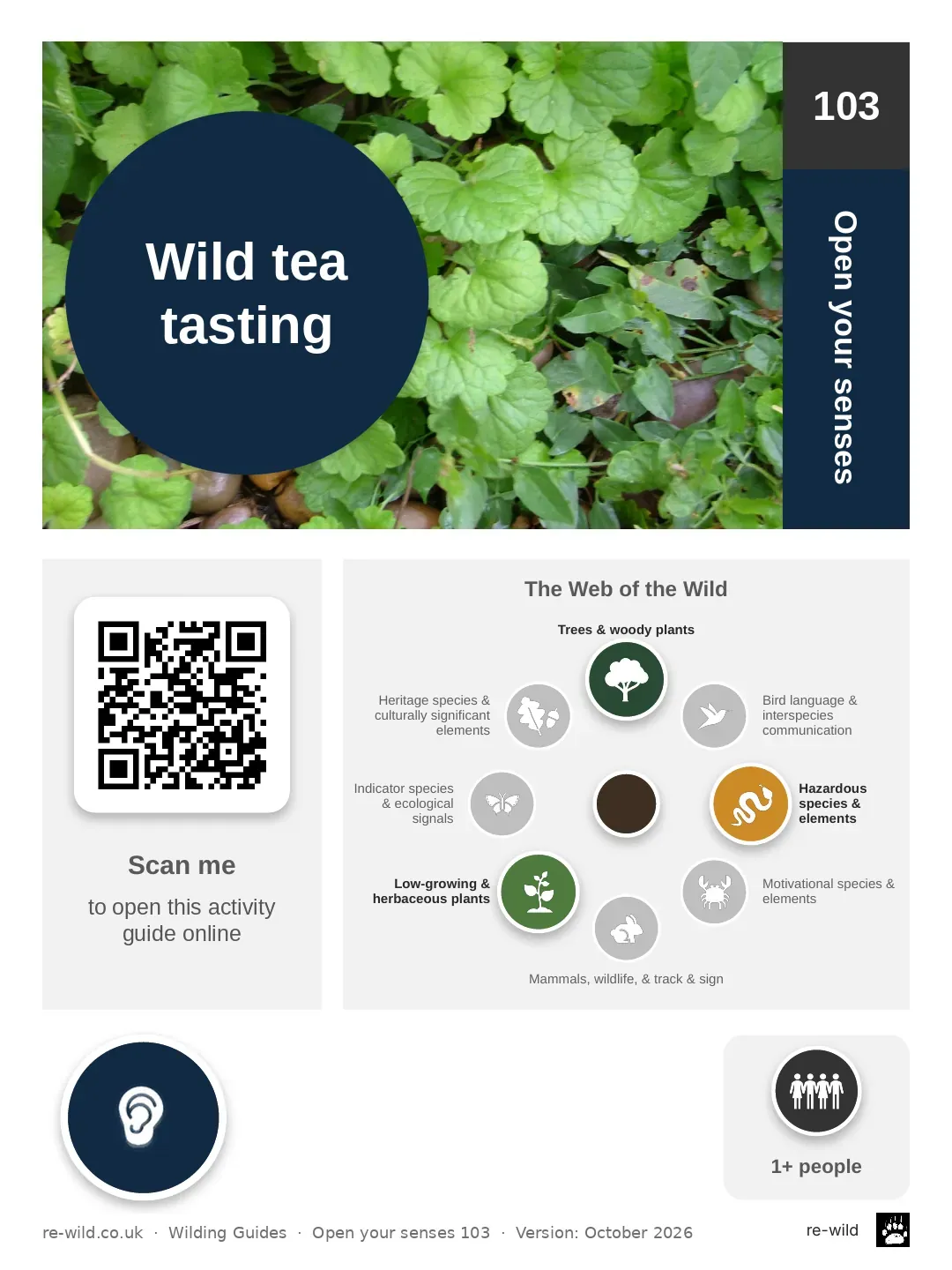
Open your sensesWild tea tasting

Step by step

  1. Make 2 or 3 seasonal wild teas, as in Making wild tea, using only plants you have identified with complete certainty. Label each one.
  2. Let the teas cool to a comfortable drinking temperature and pour a small cup of each.
  3. Taste each one slowly in turn. Notice the flavour, the smell, and how the tea feels in your mouth and body.
  4. Write a few words about each tea in your journal, then compare them side by side.
The full Wilding activity guide (what you need, safety, variations and questions to wonder about): re-wild.co.uk/g/wild-tea-tasting/
A Walk in the Wild · re-wild.co.uk