50 Wild Things to Do on a Camping Trip: printable card set
A sample of 4 cards. The full set of 50 comes with the collection. Back
Live wilderClosing down a fire

Step by step

  1. If any wood fuel has not fully burned, carefully move it away from the main heat of the fire and leave it at the periphery to begin cooling.
  2. Soak the hot parts of any partially burnt or blackened wood with cold water, and once fully cooled, either remove them for use another time or bury them in the environment.
  3. Soak the whole fire pit area with cold water, and if the fire burned for a long time or particularly hot, check for retained heat in the subsoil by inserting a digging stick to a good depth.
  4. Use your hands carefully to check the ground and embers feel properly cool.
  5. Once the ash is cool enough to handle, disperse it widely, or dispose of it following the landowner's instructions.
  6. Cover the cleared fire site with natural debris to leave as little trace as possible.
The full Wilding activity guide (what you need, safety, variations and questions to wonder about): re-wild.co.uk/g/closing-down-a-fire/
50 Wild Things to Do on a Camping Trip · re-wild.co.uk
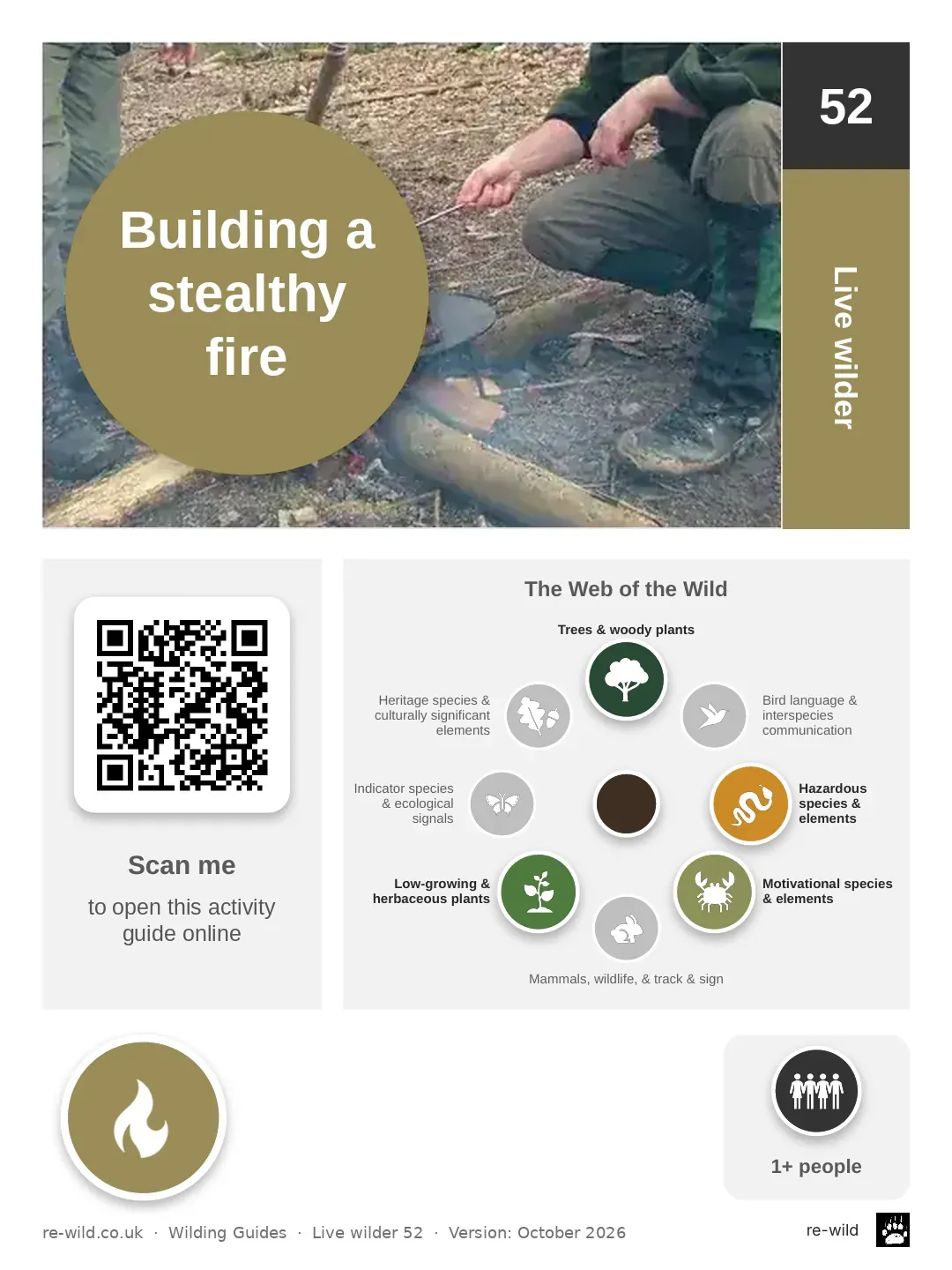
Live wilderBuilding a stealthy fire

Step by step

  1. A stealthy fire is a small fire that gives warmth or cooks food with very little smoke or glow.
  2. With the landowner's permission, choose a spot in a natural hollow or behind a bank, away from roots, peat and dry grass.
  3. Carefully lift a square of turf and set it aside, then dig a pit about thirty centimetres across and thirty centimetres deep.
  4. About thirty centimetres upwind, dig a second, narrower hole, angling it down to meet the base of the first so that air can be drawn through.
  5. Light a small fire in the main pit using very dry, dead wood no thicker than your thumb, which burns hot with little smoke.
  6. Feed it little and often.
  7. When you have finished, put the fire out completely, refill both holes and replace the turf.
The full Wilding activity guide (what you need, safety, variations and questions to wonder about): re-wild.co.uk/g/building-a-stealthy-fire/
50 Wild Things to Do on a Camping Trip · re-wild.co.uk
Live wilderFire tending

Step by step

  1. As you tend your fire, remember that the type and size of wood affects how hot and quickly it burns, and that wood left in the round burns slower and hotter than split wood.
  2. Wind and the height of the fire also affect how it burns, since a taller fire draws in more oxygen.
  3. Adding extra wood will cause a slight, temporary cooling effect before the fire builds back up.
  4. To keep a steady cooking temperature, divide your fire into 2 areas: one for making embers and one for cooking, ideally on the smoke free side. Drag embers across to the cooking area as you need them.
  5. Keeping a fire's heat well maintained also helps reduce the amount of smoke it produces.
  6. When you are finished, make sure any larger unburned logs, sometimes called fire dogs, are fully burned through before leaving the fire to go out.
The full Wilding activity guide (what you need, safety, variations and questions to wonder about): re-wild.co.uk/g/fire-tending/
50 Wild Things to Do on a Camping Trip · re-wild.co.uk
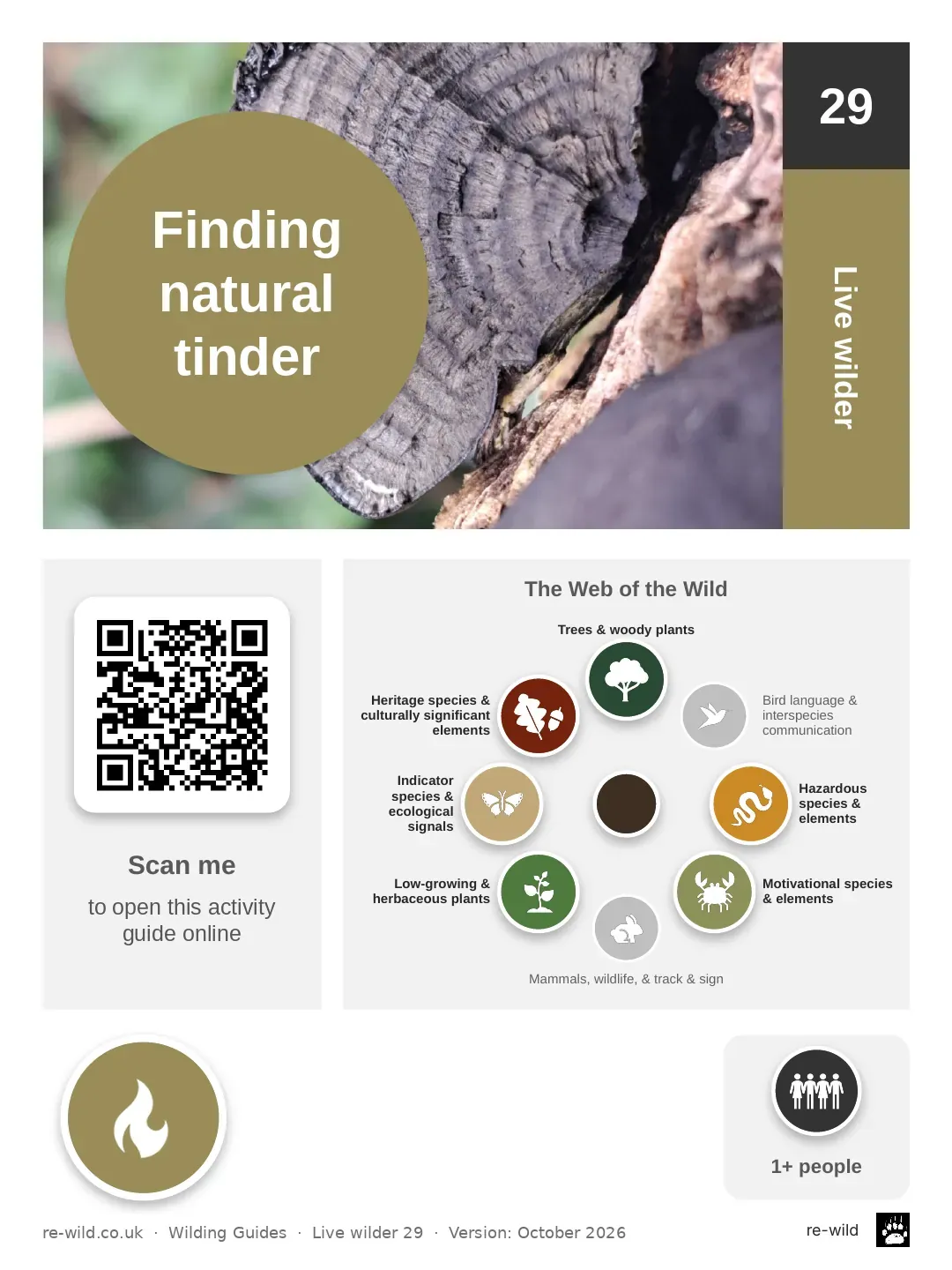
Live wilderFinding natural tinder

Step by step

  1. Explore your wild space and look for natural materials that could be lit with a match or a spark.
  2. Place your finds on a fire platform and experiment lighting each one using a variety of ignition methods. Journal your findings as you go.
The full Wilding activity guide (what you need, safety, variations and questions to wonder about): re-wild.co.uk/g/finding-natural-tinder/
50 Wild Things to Do on a Camping Trip · re-wild.co.uk