50 Wild Things to Do on a Woodland Walk: printable card set
A sample of 4 cards. The full set of 50 comes with the collection. Back
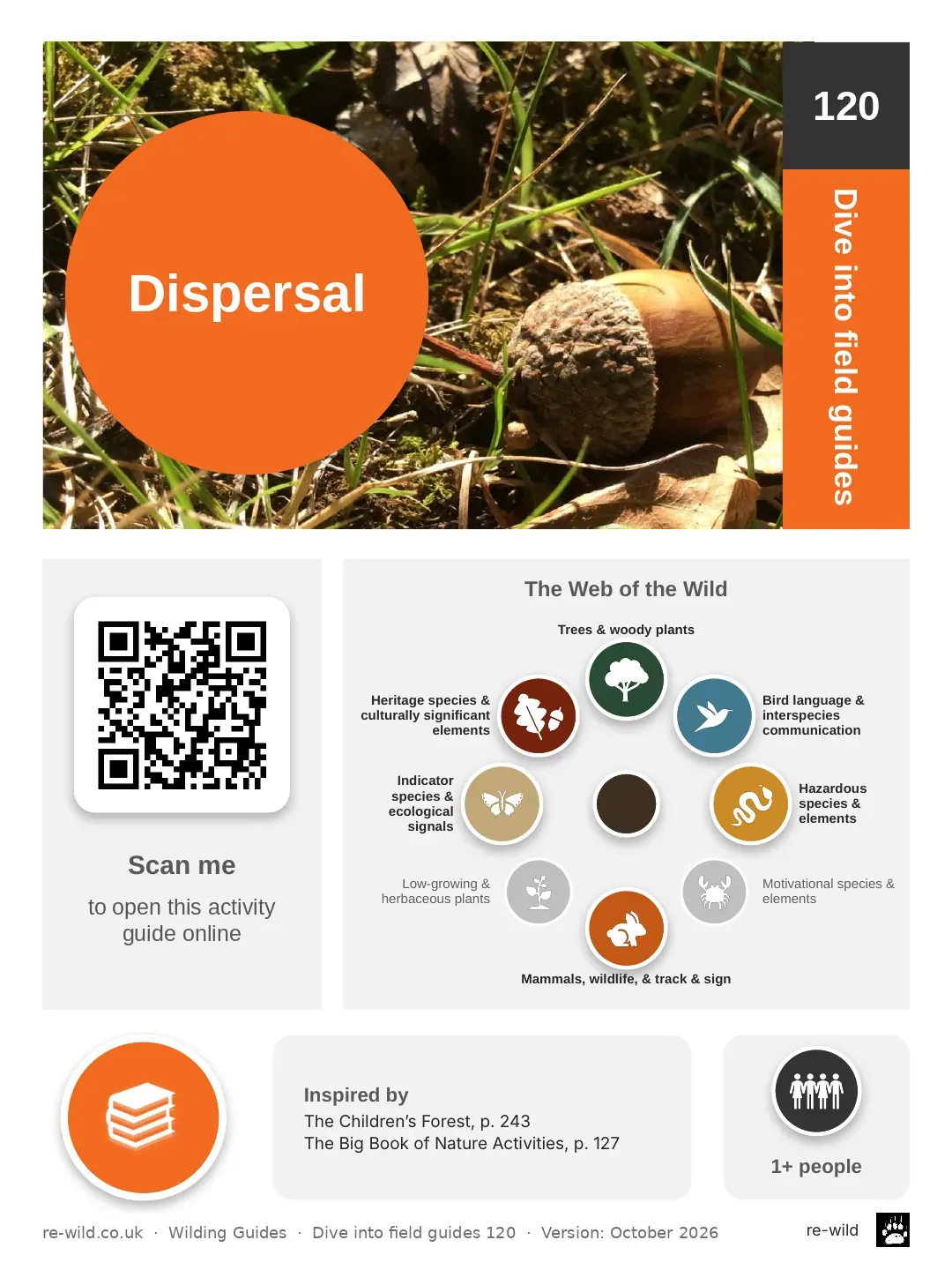
Dive into field guidesDispersal

Step by step

  1. Visit a few different habitats in autumn and look for plant and tree seeds, nuts, fruits and berries. For each one you find, journal what you notice and work out which of 7 seed dispersal methods it uses. It might be eaten as a fruit, be a nut stored by animals, hitch a ride on fur or clothing, or float on a lightweight parachute. Or it might spin like a helicopter key, float on water, or be flung out when the pod bursts.
The full Wilding activity guide (what you need, safety, variations and questions to wonder about): re-wild.co.uk/g/dispersal/
50 Wild Things to Do on a Woodland Walk · re-wild.co.uk
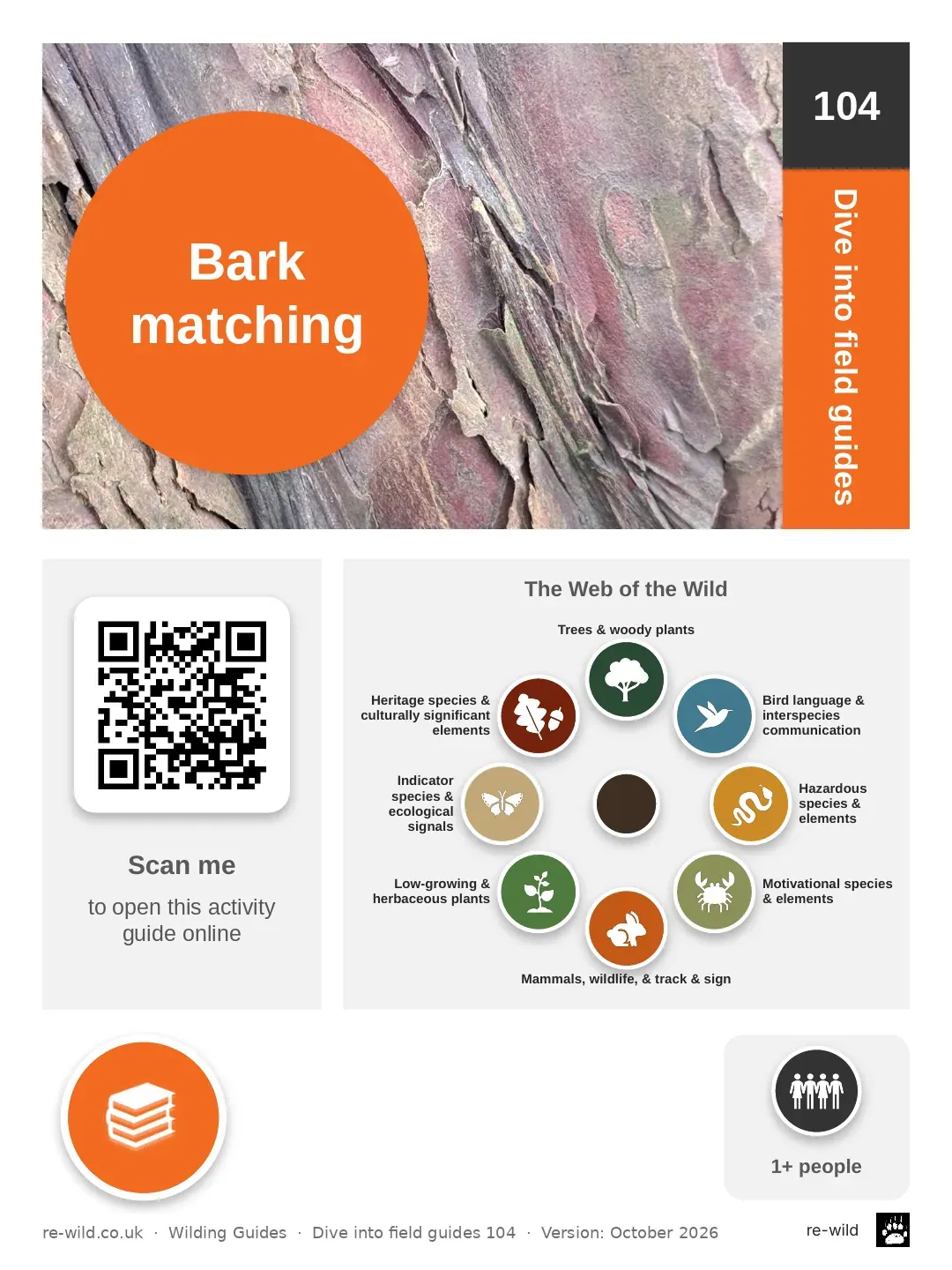
Dive into field guidesBark matching

Step by step

  1. Choose an area with at least 5 different kinds of tree.
  2. Give each person a sheet of paper and a wax crayon.
  3. Ask them to pick 1 tree in secret, hold the paper flat against the trunk at chest height and rub with the side of the crayon until the pattern of the bark appears.
  4. Before leaving their tree, they should look closely at the bark and touch it, noticing its colour, whether it is smooth, ridged, flaking or peeling, and which way the lines run.
  5. Gather the rubbings together and mix them up. Each person takes a rubbing that is not their own and sets out to find the tree it came from, holding the paper against likely trunks to compare.
  6. When everyone has found a match, visit each tree in turn.
  7. Let the person who made the rubbing confirm it, and use a field guide to name the tree.
The full Wilding activity guide (what you need, safety, variations and questions to wonder about): re-wild.co.uk/g/bark-matching/
50 Wild Things to Do on a Woodland Walk · re-wild.co.uk
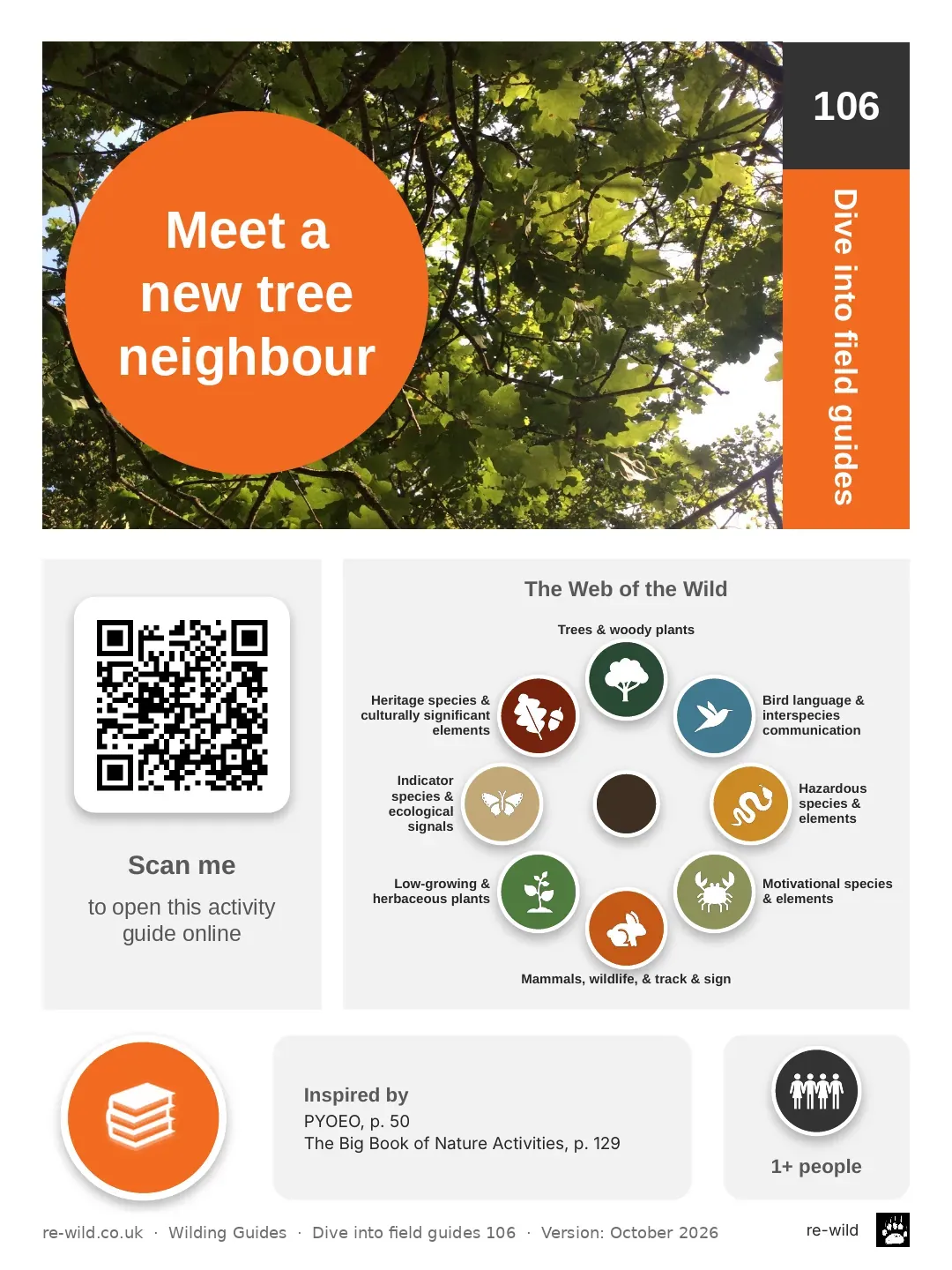
Dive into field guidesMeet a new tree neighbour

Step by step

  1. Relax at your sit spot and notice a tree nearby whose name you do not yet know. Get to know this new neighbour by exploring and drawing one of its leaves, buds, twigs, bark, flowers or fruit. Journal your findings, adding sketches or even a pressed leaf, and use a field guide to help you work out the species.
The full Wilding activity guide (what you need, safety, variations and questions to wonder about): re-wild.co.uk/g/meet-a-new-tree-neighbour/
50 Wild Things to Do on a Woodland Walk · re-wild.co.uk
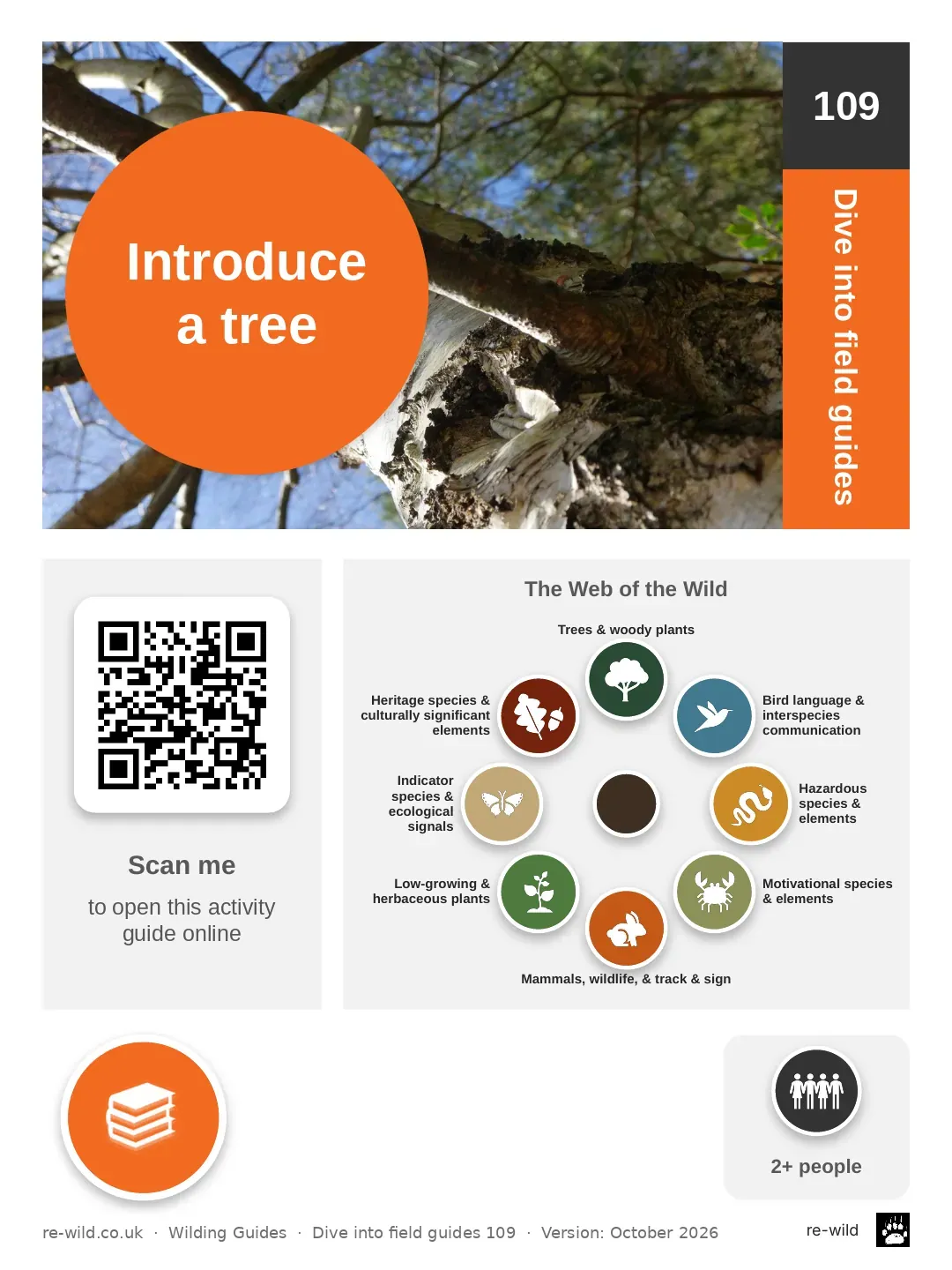
Dive into field guidesIntroduce a tree

Step by step

  1. Find a tree that you feel drawn to.
  2. Explore it using your senses, noticing its bark texture, the smell of its leaves or bark, the sound of wind moving through its branches, and its overall shape.
  3. If you like, give the tree a name that reflects its shape, texture or colour, such as the elephant tree.
  4. Introduce someone you know to your tree, or write about it in your journal.
The full Wilding activity guide (what you need, safety, variations and questions to wonder about): re-wild.co.uk/g/introduce-a-tree/
50 Wild Things to Do on a Woodland Walk · re-wild.co.uk