After Dark: printable card set
A sample of 4 cards. The full set of 24 comes with the collection. Back
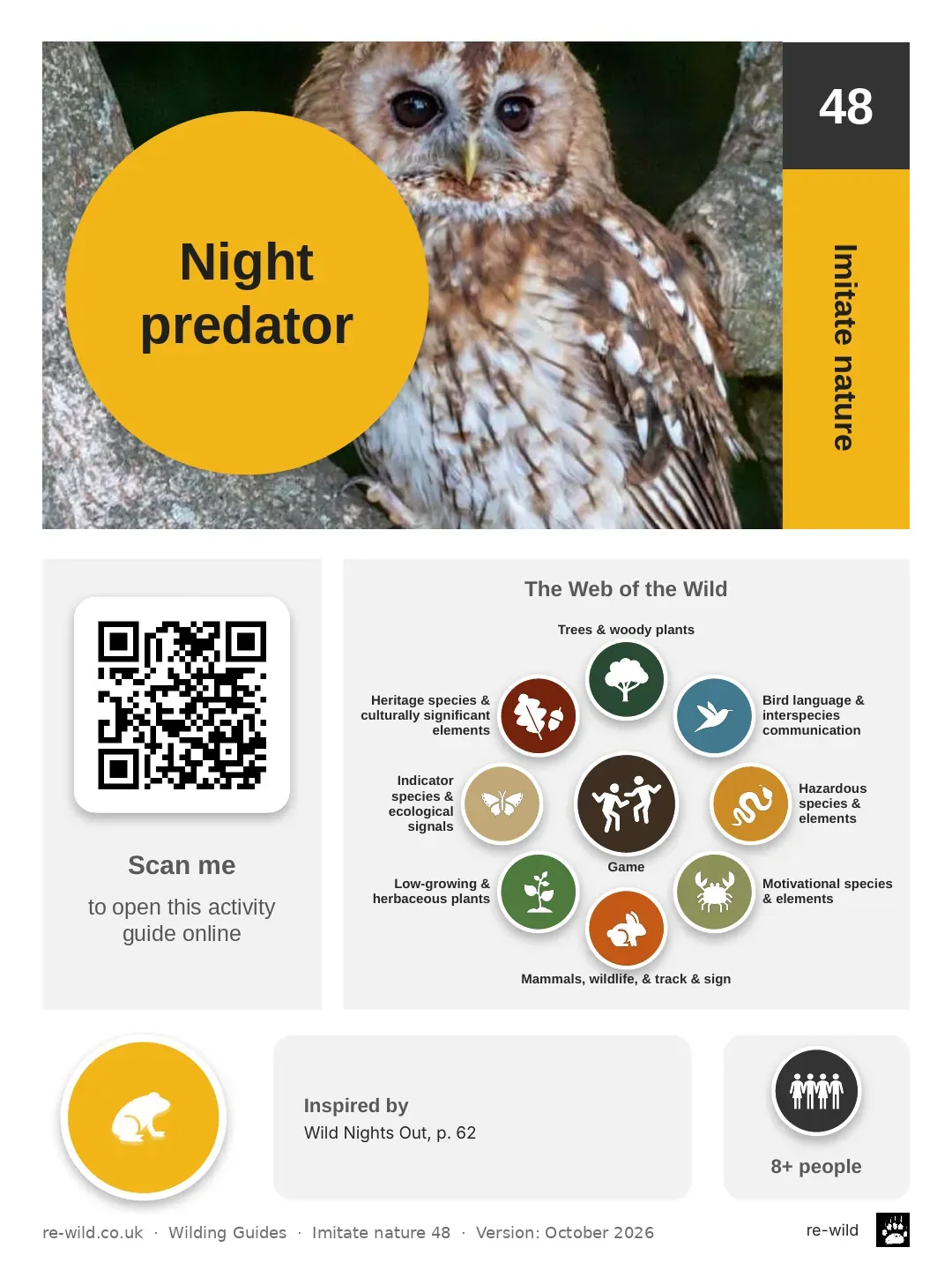
Imitate natureNight predator

Step by step

  1. Before the session, find an open area roughly 100 metres wide, such as a glade. Hang a glow stick from a low branch at each end of the area, and a lantern halfway across at the edge to mark a waiting area. As it starts to get dark, gather your group and explain the game.
  2. Ask for a volunteer to be the predatory night hunter, giving them a water squirter and letting them conceal themselves in the shadows.
  3. Split the rest of the group into 2 groups, each waiting under a different glow stick, and give them a few minutes to discuss tactics.
  4. When the activity begins, each team tries to cross the area to reach the opposite glow stick. Anyone squirted by the night hunter sits out in the waiting area for the rest of the round. Each group scores a point for every member who reaches the far side without being squirted.
  5. After around 15 minutes, the group with the most points wins.
The full Wilding activity guide (what you need, safety, variations and questions to wonder about): re-wild.co.uk/g/night-predator/
After Dark · re-wild.co.uk
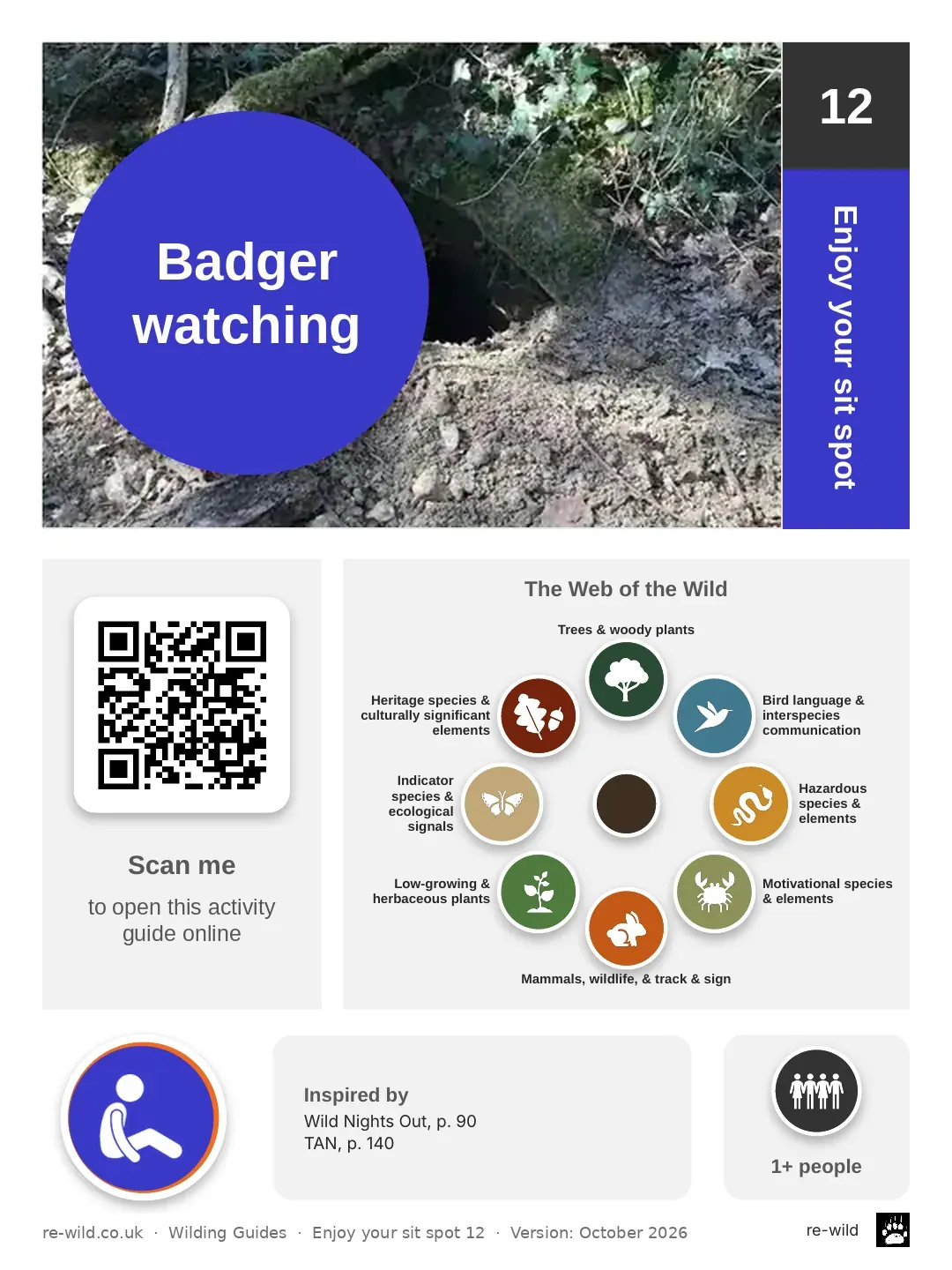
Enjoy your sit spotBadger watching

Step by step

  1. Research badgers before you go, including the best times to watch them, how they sense the world, and where their sett might be located.
  2. During daylight hours, locate a sett and look for signs of active entrances.
  3. Choose a sit spot more than 10 metres away, ideally facing into the prevailing wind and with your silhouette broken up, such as against a tree. Dress in drab, quiet clothing suited to the weather, covering exposed skin to reduce insect bites, and avoid strong smelling soaps or insect repellent that might give away your scent. Settle into your sit spot well before dusk, get comfortable, and stay as still and quiet as possible throughout, including when you leave.
The full Wilding activity guide (what you need, safety, variations and questions to wonder about): re-wild.co.uk/g/badger-watching/
After Dark · re-wild.co.uk
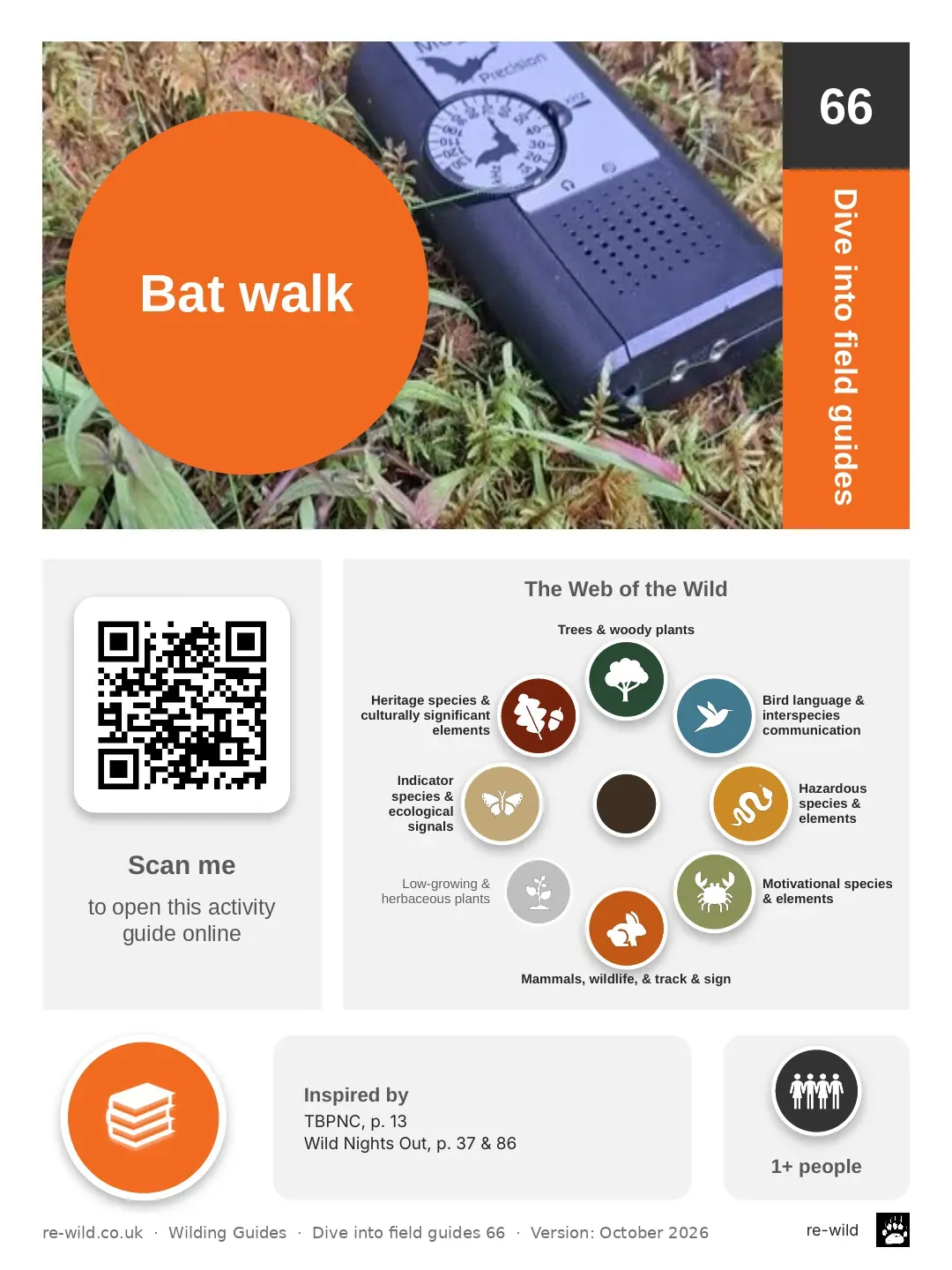
Dive into field guidesBat walk

Step by step

  1. Choose a frequency on your detector suited to bat species that might live in your area. Spend time before dusk in places bats are likely to forage, such as near water, hedgerows or under a known roost. Aim the detector at a bat silhouette if you can see one, or scan slowly across the sky if it is too dark, adjusting the frequency as you listen for clicks.
  2. Record your observations, including location, time and any patterns you notice.
The full Wilding activity guide (what you need, safety, variations and questions to wonder about): re-wild.co.uk/g/bat-walk/
After Dark · re-wild.co.uk
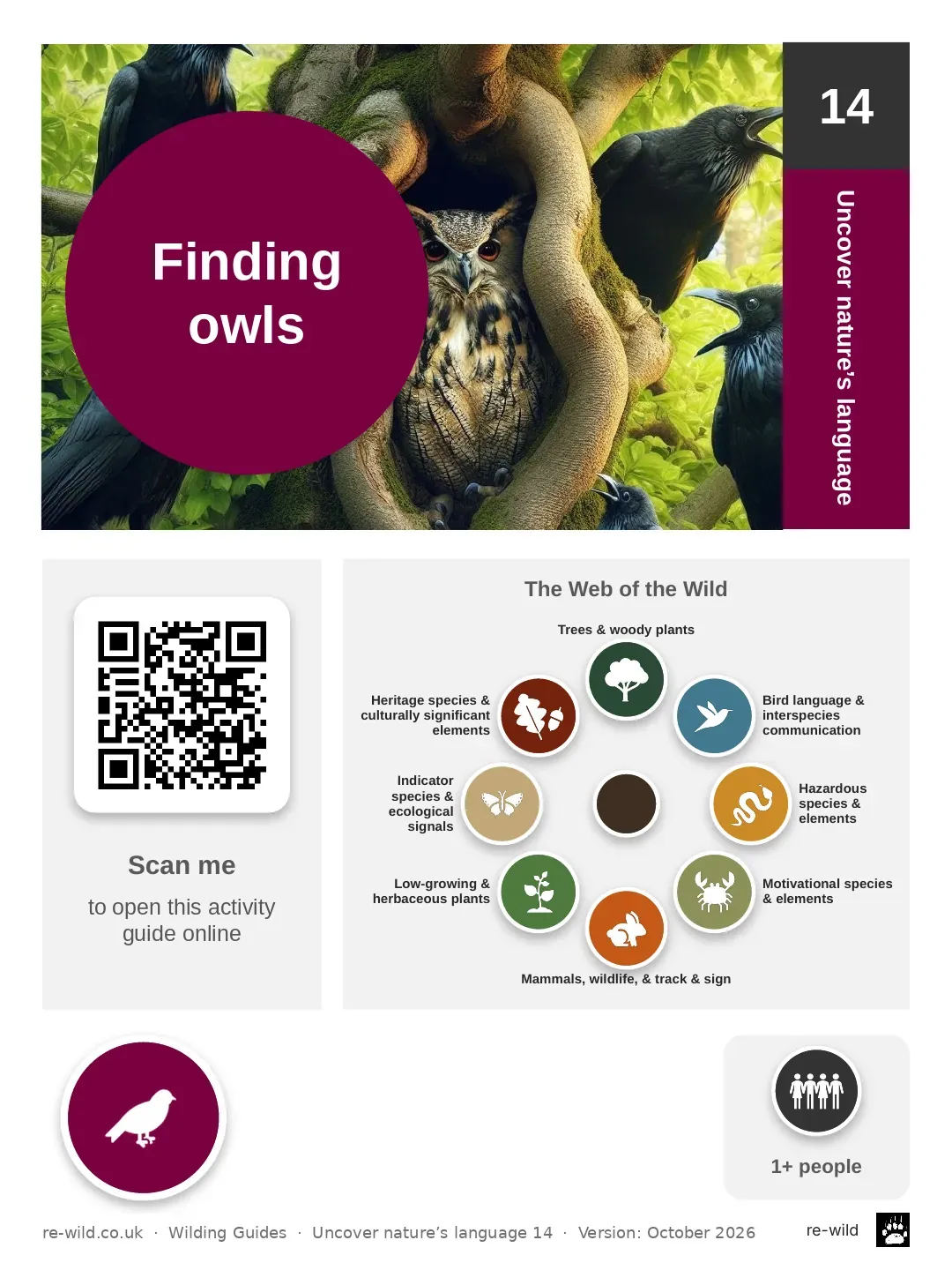
Uncover nature's languageFinding owls

Step by step

  1. Choose a habitat that would suit owls, such as a woodland or park with mature trees. Spend some time getting to know the area during the day so you are familiar with it. Head out again at dawn or dusk, when owls are more active.
  2. Listen for other birds giving loud, continuous alarm calls, sometimes lasting 5 to 30 minutes, aimed at 1 particular sheltered tree.
  3. Follow the direction the alarming birds are looking to help you locate the owl.
The full Wilding activity guide (what you need, safety, variations and questions to wonder about): re-wild.co.uk/g/finding-owls/
After Dark · re-wild.co.uk