Live wilderVisual tree assessment
Step by step
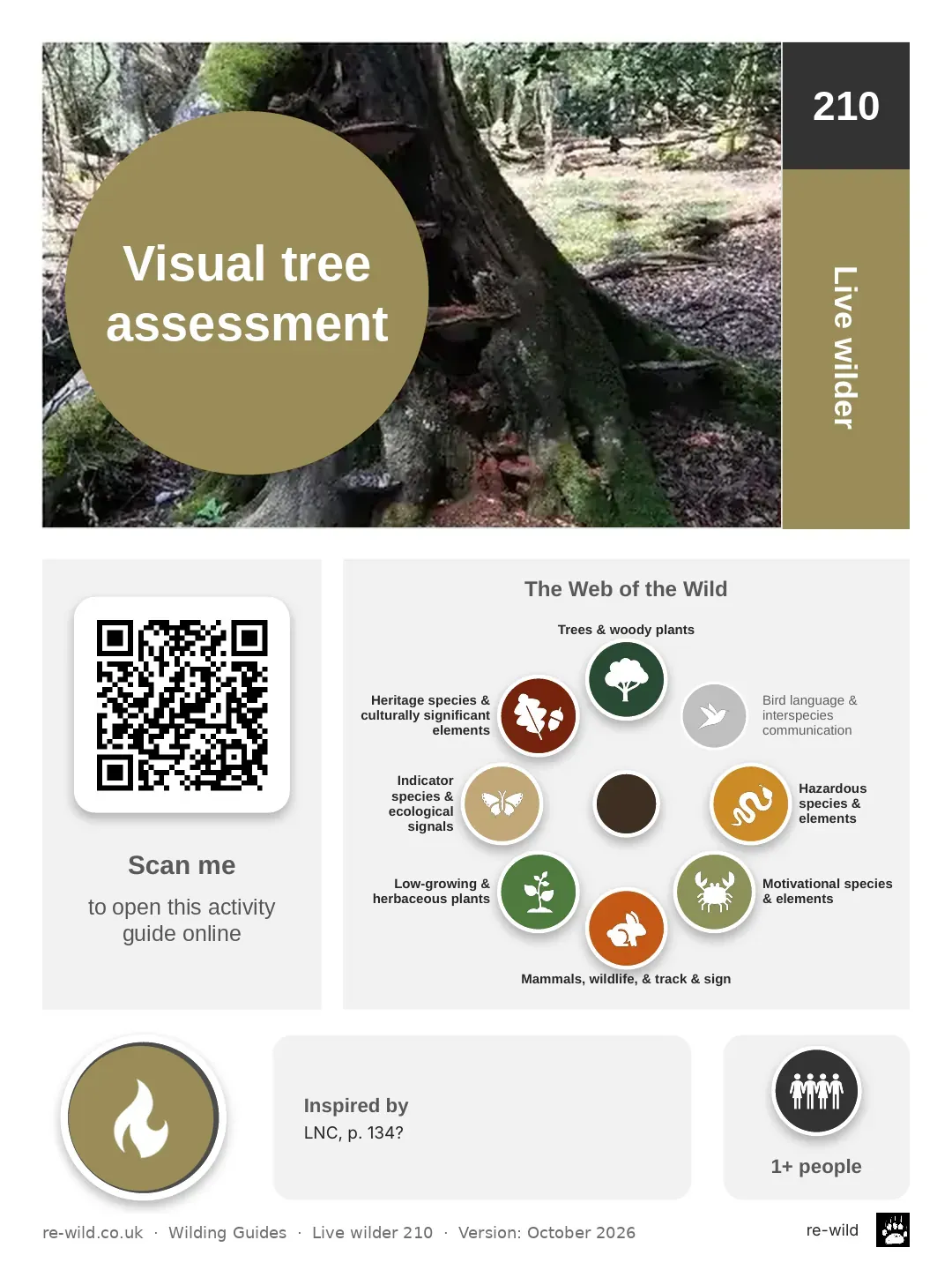
- Choose a tree that is easy to access, where you can clearly see its roots, trunk, branches and leaves.
- Start with the roots, looking for any that are exposed, cut or damaged, and checking for soil heaving or fungi growing nearby. Inspect the trunk, checking the bark is continuous, looking for cracks, splits, holes or cavities, noting whether the tree is leaning, and checking for any oozing sap or unusually dark, wet patches.
- Look at the branches, checking for darker patches, sparse leaves, large broken or dangling branches, or branches that cross and rub against each other.
- Check the leaves, looking for a healthy amount appropriate to the season, any discolouration or spots, and any wilting or early leaf drop.
- Finally, look for signs of insect damage, holes, larvae, or unusual growths such as burls or galls.
The full Wilding activity guide (what you need, safety, variations and questions to wonder about): re-wild.co.uk/g/visual-tree-assessment/
Bushcraft Essentials · re-wild.co.uk
Bushcraft Essentials · re-wild.co.uk