Wild Games 1: Stalk, Hide & Chase: printable card set
A sample of 4 cards. The full set of 51 comes with the collection. Back
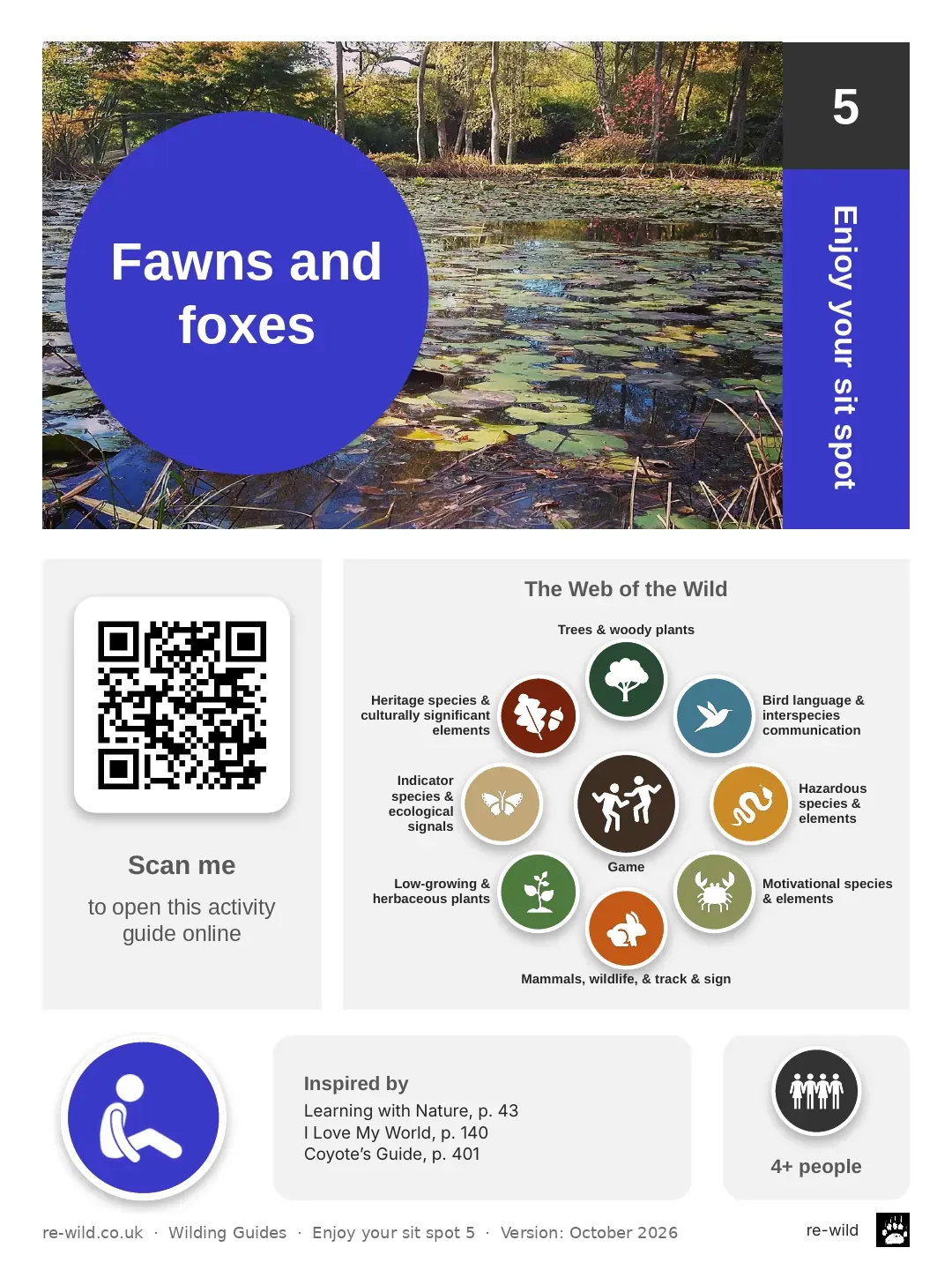
Enjoy your sit spotFawns and foxes

Step by step

  1. Explain to the group that fawns are born with almost no scent and excellent camouflage, and while their mother forages they must lie completely still.
  2. Mark out a playing area and divide the group into foxes and fawns.
  3. Send the fawns off to find a spot to lie down and stay motionless, or lie on their backs with eyes open. The foxes then roam the area, sniffing near the fawns and trying to make them move or laugh with funny faces or gentle antics, without ever touching them. A judge decides which fawns move or laugh, and any that do join the foxes for the next round.
The full Wilding activity guide (what you need, safety, variations and questions to wonder about): re-wild.co.uk/g/sleeping-fawn/
Wild Games 1: Stalk, Hide & Chase · re-wild.co.uk
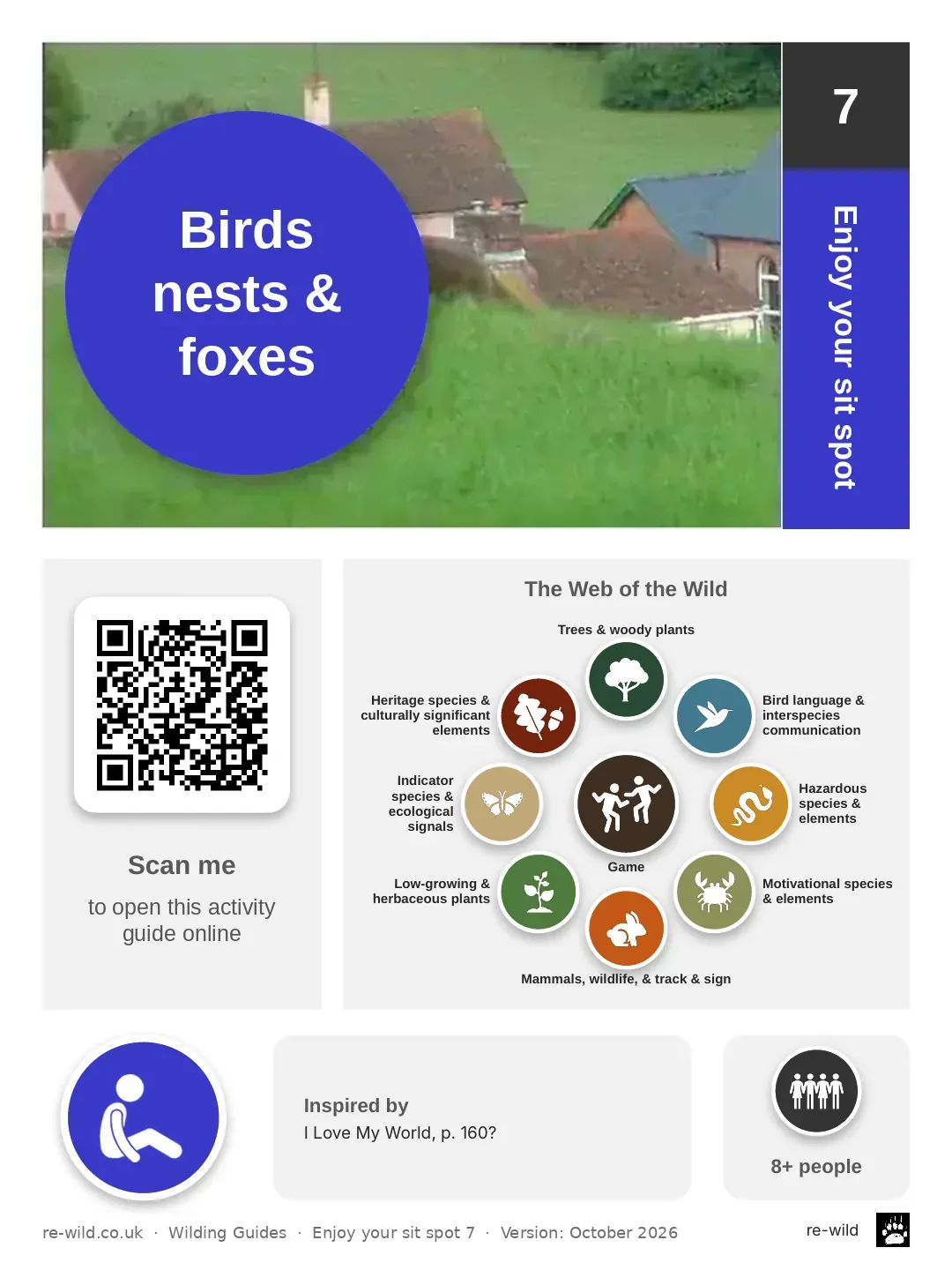
Enjoy your sit spotBirds nests & foxes

Step by step

  1. Mark out a nesting territory, roughly half the size of a football pitch for around 30 people aged 7 to 10.
  2. Divide the group into foxes and birds, with about one fox for every 4 birds.
  3. Send the birds off with 4 or 5 eggs, such as walnuts or hazelnuts, and ask them to camouflage themselves and build a nest to sit on while incubating their eggs. Meanwhile, the foxes camouflage themselves and practise sneaking.
  4. Once the nests are built, the foxes search for them and sniff near the birds.
  5. If a bird flinches or moves anything other than its eyes, the fox takes an egg. Each fox may only raid each nest once.
The full Wilding activity guide (what you need, safety, variations and questions to wonder about): re-wild.co.uk/g/bird-nests-and-foxes/
Wild Games 1: Stalk, Hide & Chase · re-wild.co.uk
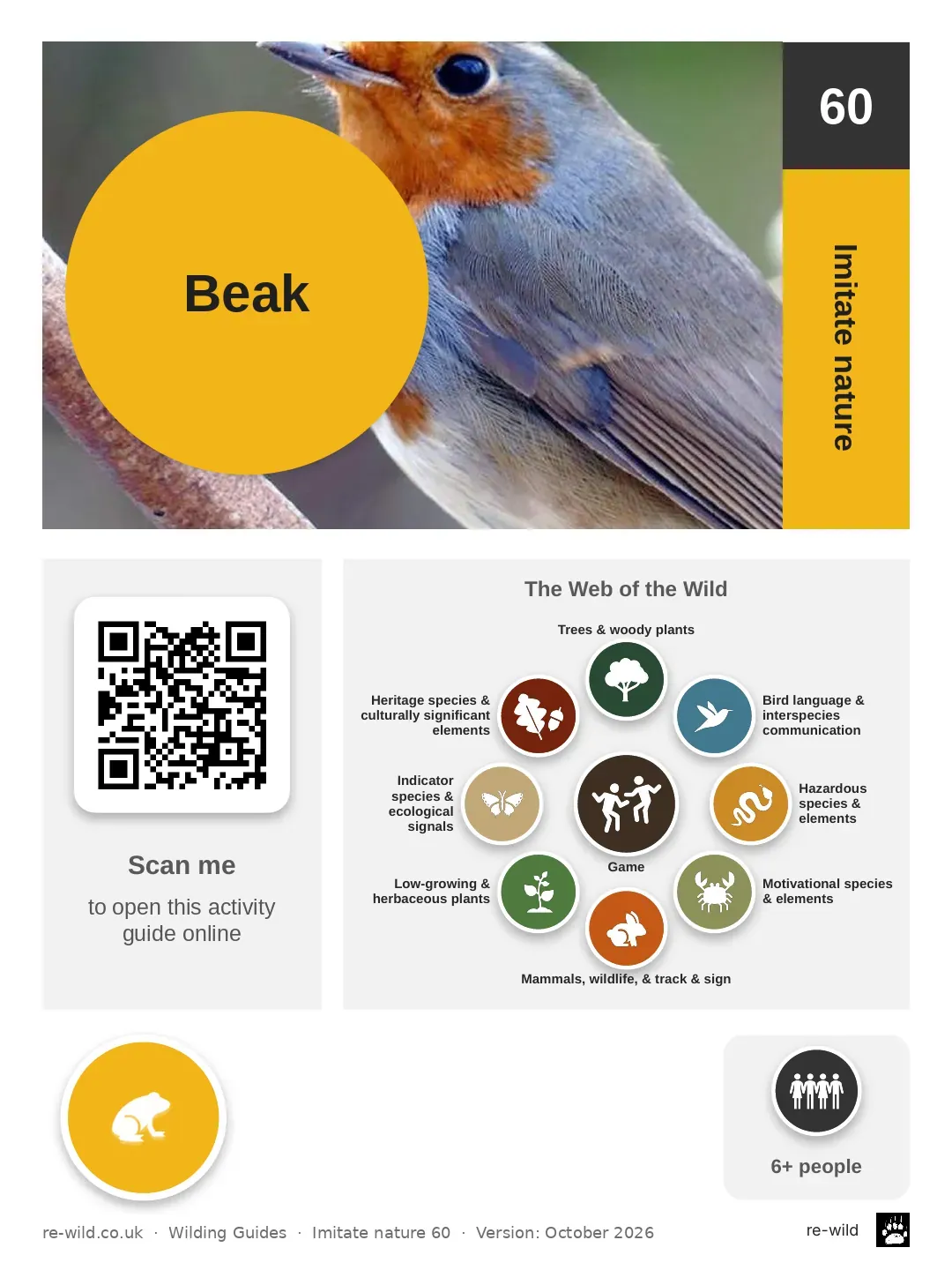
Imitate natureBeak

Step by step

  1. Before the session, scatter items representing food, such as empty shells and bean bags for worms or slugs, around a defined playing area.
  2. Gather your group and divide them into smaller groups, each imagining they are a songbird foraging for their newly hatched family.
  3. Demonstrate how to use a beak by holding 1 stick in each hand and using them together to pick up food.
  4. Ask each group to find a bucket just outside the playing area to represent their nest, and line up behind it.
  5. When the activity begins, the first person in each line picks up their sticks, ventures into the playing area, and tries to pick up food with their beak to carry back to the nest, before the next person in line takes their turn. Each group finishes once every member has delivered food to the nest.
  6. Afterwards, discuss which beak shape would suit different food types best.
The full Wilding activity guide (what you need, safety, variations and questions to wonder about): re-wild.co.uk/g/beak/
Wild Games 1: Stalk, Hide & Chase · re-wild.co.uk
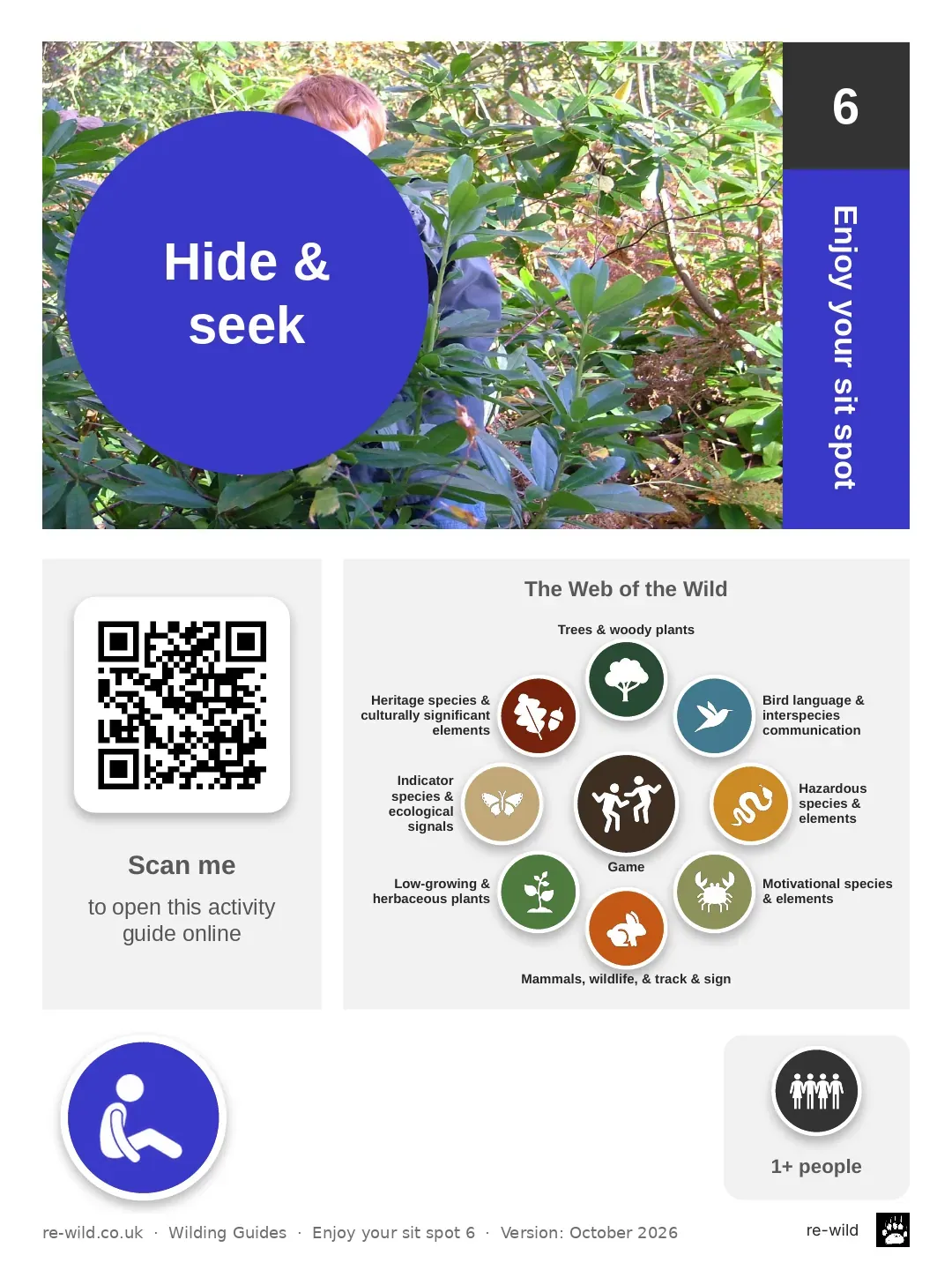
Enjoy your sit spotHide & seek

Step by step

  1. Play a simple game of hide and seek in a safe, bounded natural area.
  2. When seeking, take your time finding each person, so there is a real opportunity for them to feel comfortable in their hiding spot and notice any wildlife moving around them while they wait.
The full Wilding activity guide (what you need, safety, variations and questions to wonder about): re-wild.co.uk/g/hide-and-seek/
Wild Games 1: Stalk, Hide & Chase · re-wild.co.uk