Tracking & Trailing: printable card set
A sample of 4 cards. The full set of 56 comes with the collection. Back
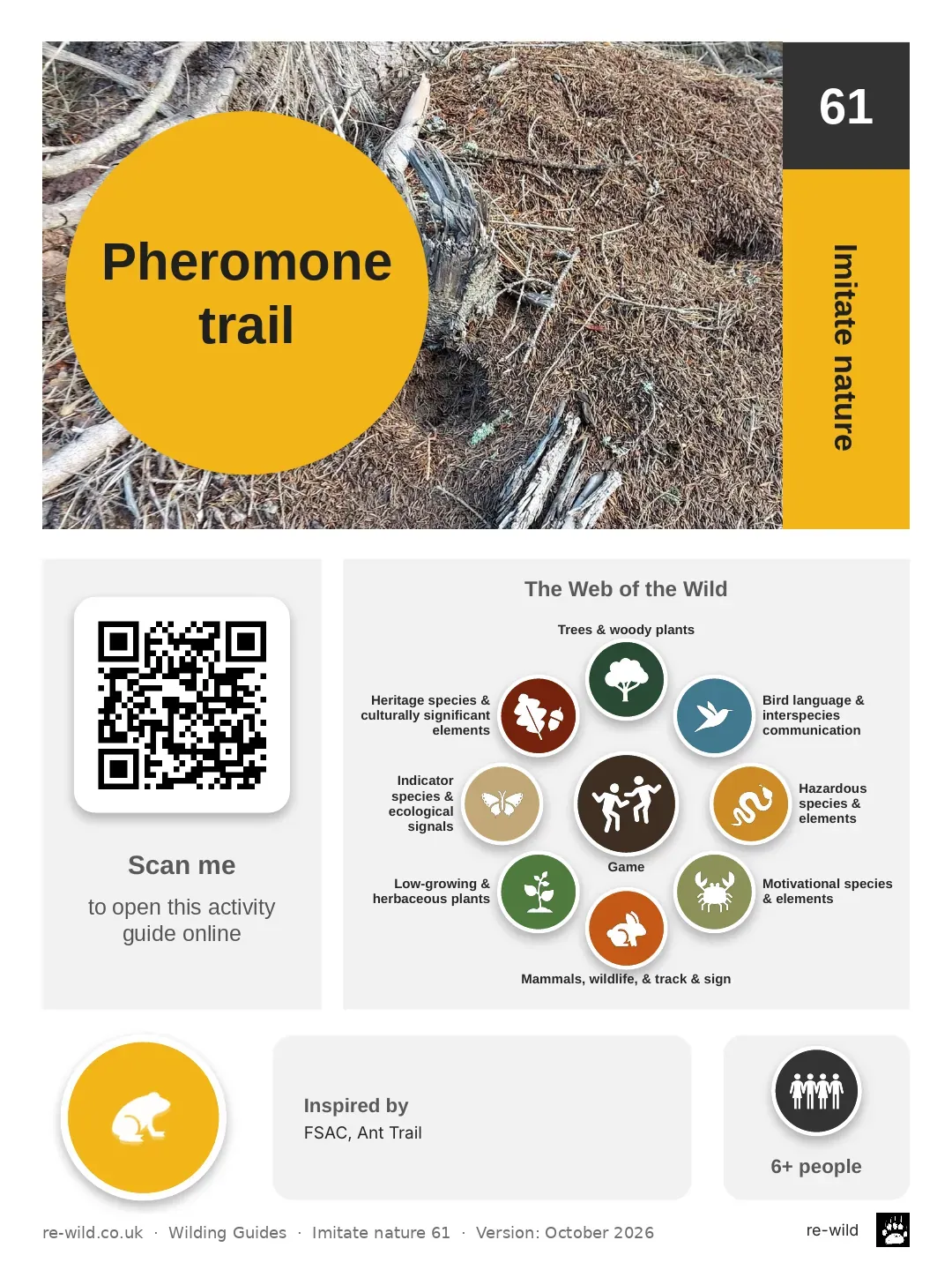
Imitate naturePheromone trail

Step by step

  1. Plan a walking trail through a woodland.
  2. Gather your group and start a discussion about the different roles within an ant colony and how ants communicate using scent trails.
  3. Invite the group to stand in a line along the trail, tasked with finding food and materials that might be useful for building a home.
  4. When the ant at the front of the line finds something useful, they pick it up and pass it back along the line, person to person. That same ant then moves quickly to the back of the line and takes the object from the last person, holding onto it. The new front person then repeats the process, continuing until every ant in the colony has collected something.
  5. Once the colony reaches its intended home site, invite the group to discuss the objects they gathered.
The full Wilding activity guide (what you need, safety, variations and questions to wonder about): re-wild.co.uk/g/pheromone-trail/
Tracking & Trailing · re-wild.co.uk
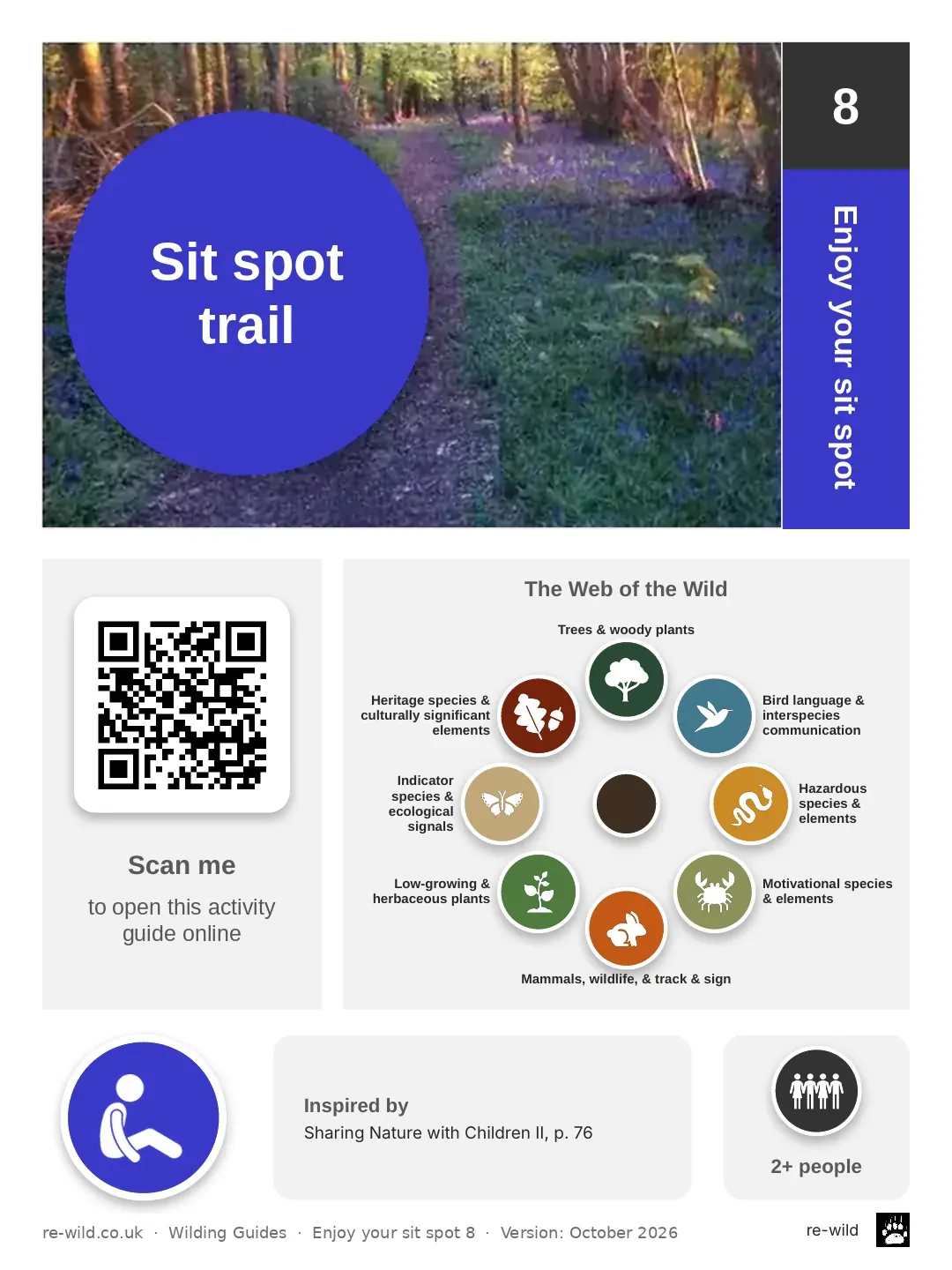
Enjoy your sit spotSit spot trail

Step by step

  1. As the group walks along a trail, raise your hand whenever you approach a particularly beautiful or inviting spot. Any person interested in sitting there raises their own hand, and one is chosen to stay as their sit spot for the day.
  2. Continue walking along the trail, repeating this process until every person has their own sit spot.
  3. After 20 to 30 minutes, gather everyone together, ideally somewhere they can sit, and invite them to share their experience.
The full Wilding activity guide (what you need, safety, variations and questions to wonder about): re-wild.co.uk/g/sit-spot-trail/
Tracking & Trailing · re-wild.co.uk
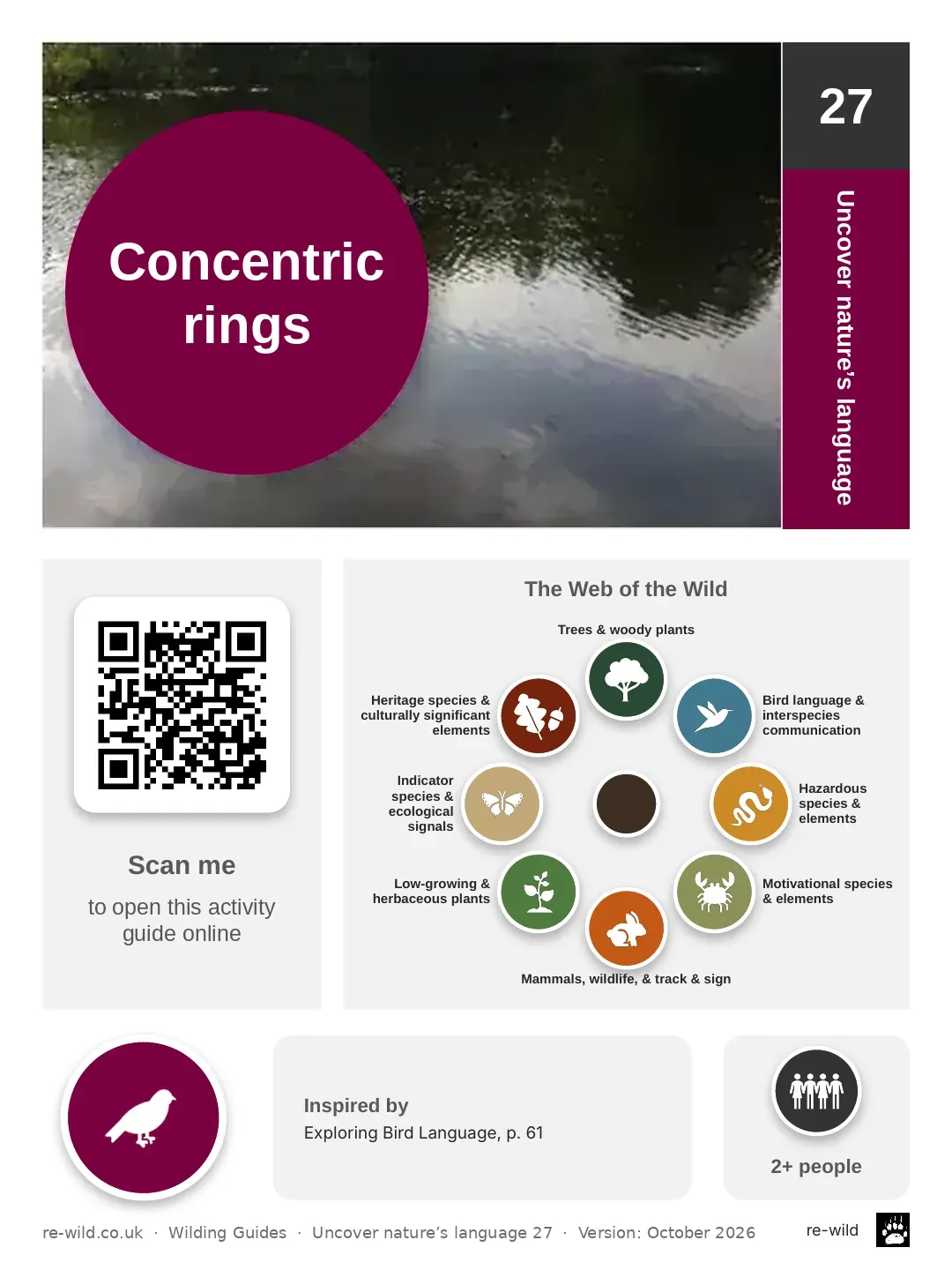
Uncover nature's languageConcentric rings

Step by step

  1. Gather the group at the edge of a pond or other still water and ask them to face away from it. Quietly throw a stone into the water, then ask the group to turn and look, explaining that the splash represents them walking through a landscape in a raw, unaware state.
  2. Ask them to turn away again, throw another stone, and after a few seconds ask them to turn around and work out where it landed from the ripples alone.
  3. Finally, throw some lighter stones that create smaller ripples, explaining that this represents someone moving quietly and carefully through a landscape.
The full Wilding activity guide (what you need, safety, variations and questions to wonder about): re-wild.co.uk/g/concentric-rings/
Tracking & Trailing · re-wild.co.uk
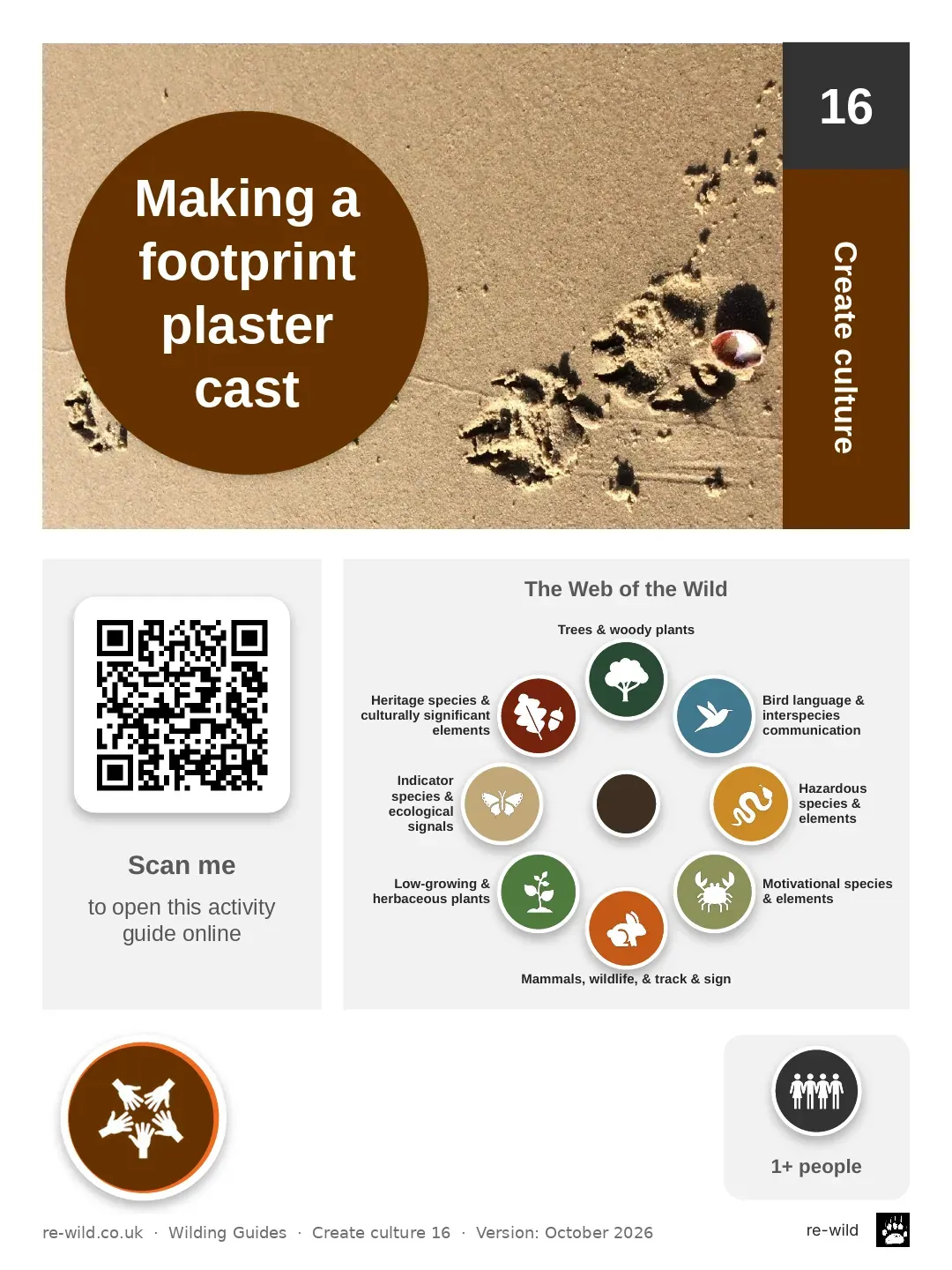
Create cultureMaking a footprint plaster cast

Step by step

  1. Find a clear animal track, ideally in slightly damp mud or silt rather than sand.
  2. Place a strip of cardboard or plastic around the track, about 2 centimetres from its edges, and secure it into a circle with a paper clip.
  3. Press the strip gently into the ground so it holds firm.
  4. Pour 1 cup of water into a mixing container and slowly stir in plaster of paris until the mixture is like thick yoghurt.
  5. Keep stirring, as the plaster will begin to set once it meets water.
  6. Pour the mixture into the circle and tap the sides gently to remove air bubbles. Wait about an hour and check whether the cast has set.
  7. Once set, carefully scrape away the excess soil, then rinse the rest off gently under running water after a further 2 hours.
The full Wilding activity guide (what you need, safety, variations and questions to wonder about): re-wild.co.uk/g/making-a-footprint-plaster-cast/
Tracking & Trailing · re-wild.co.uk