
How the activity guides work
Each Wilding activity guide is a printable card: a front that tells you at a glance what it is, and a back page with everything you need to do it. Here is a real one, Building a debris shelter, explained part by part.
What each part of the card means
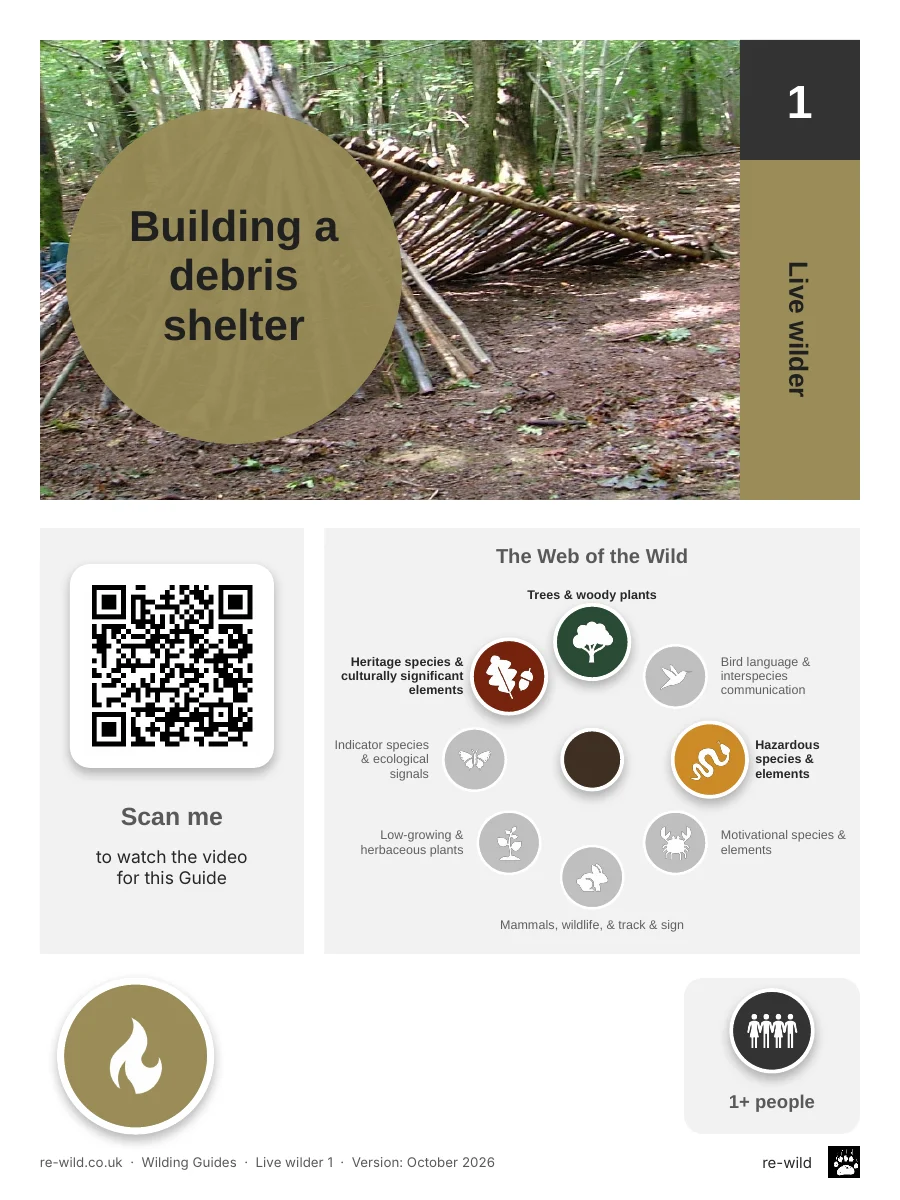
- Title What you will do, in a few words.
- Photo A real moment from the activity, so you know what you are aiming for.
- Number Its place in the Practice Key, so cards are easy to sort and find.
- Practice Key Which of the 15 Practice Keys this activity guide opens. The colour runs through every card in that Key.
- Scan me Point your phone camera at the QR code to watch a short film of the activity.
- The Web of the Wild The communities of nature this activity connects you with. Coloured circles are the ones it explores.
- Key icon A quick visual signpost to the Practice Key.
- Group size How many people it needs, from one upwards.
- Footer The Key, the activity guide number and the version date.
Everything you need to do it
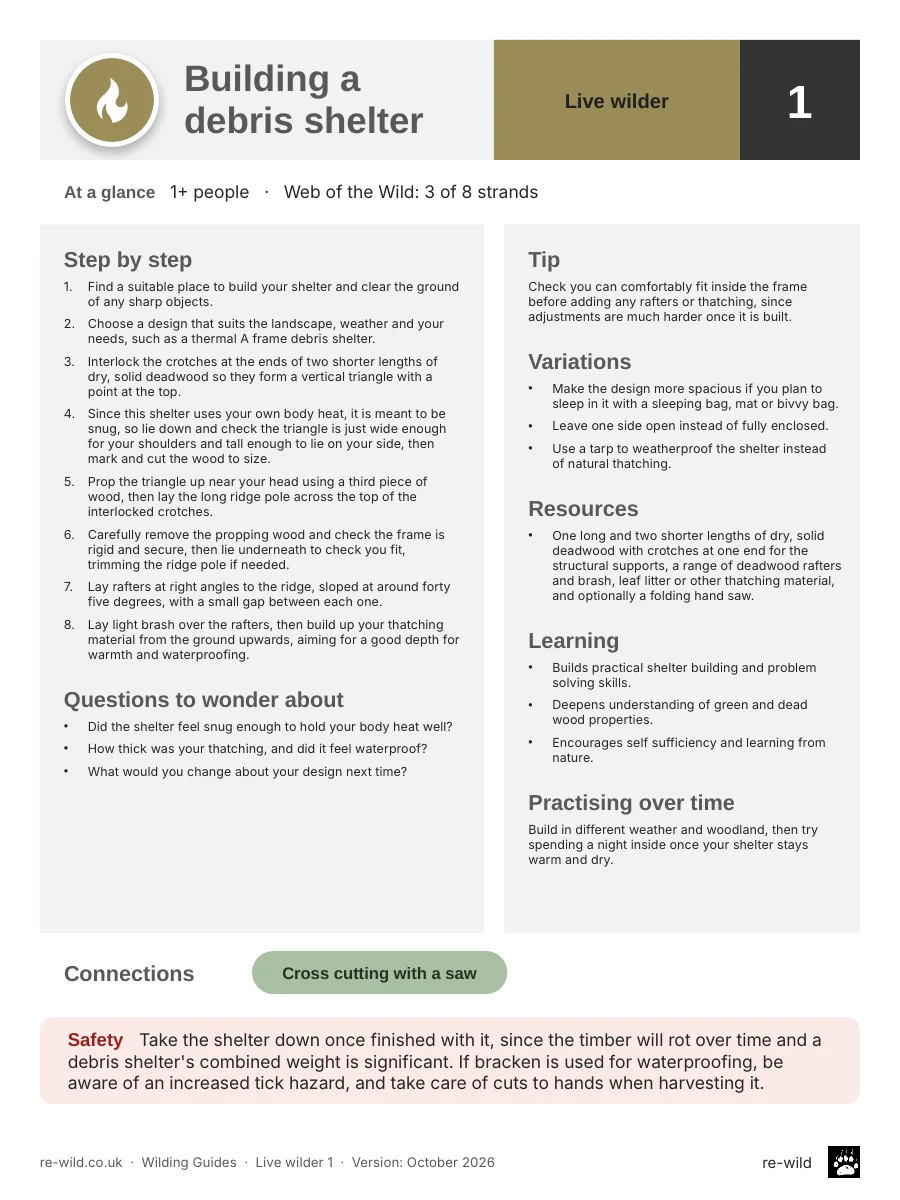
- Header The title, Key colour and number again, so the back page works on its own.
- At a glance Group size and how much of the Web of the Wild it touches.
- Step by step Clear numbered steps to follow outdoors.
- Questions to wonder about Prompts to deepen your noticing and curiosity afterwards.
- Tip & variations What makes it work, and ways to make it easier, harder or different.
- Resources Exactly what you need. Templates and charts are included with the activity guide.
- Learning & practising over time What it builds, and how to come back to it through the seasons.
- Connections Related activity guides to try next.
- Safety The risks to think about before you start. Every activity guide has one.
The QR code takes you to a short film
Every card has a QR code. Scan it with your phone camera and it opens that activity guide’s page, with a short step-by-step film you can watch before you head out. Here is the film for Building a debris shelter.
From single activities to a journey
One activity guide is a good afternoon. A few, chosen with intention and repeated over weeks, become a journey. Here are three ways to put them together.
A personal journey
For you, over four weeks
- Week 1
 Sit spotFind your place and return to it
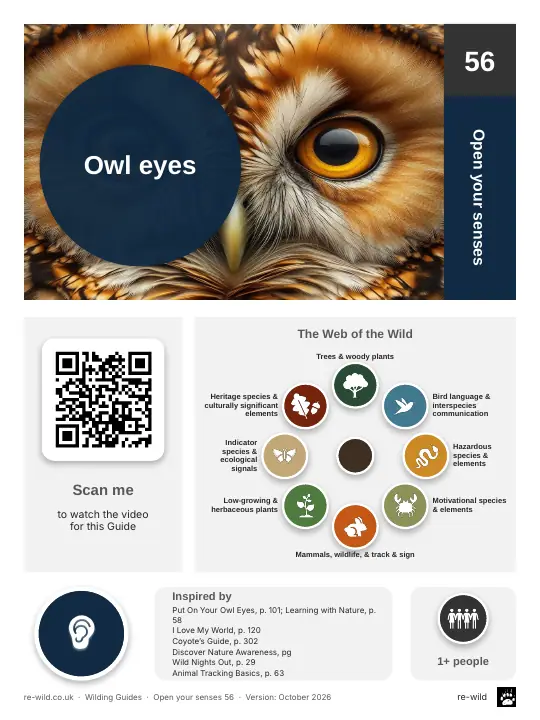
 - Week 2Owl eyesWiden your vision at your sit spotDear earsThen your hearing
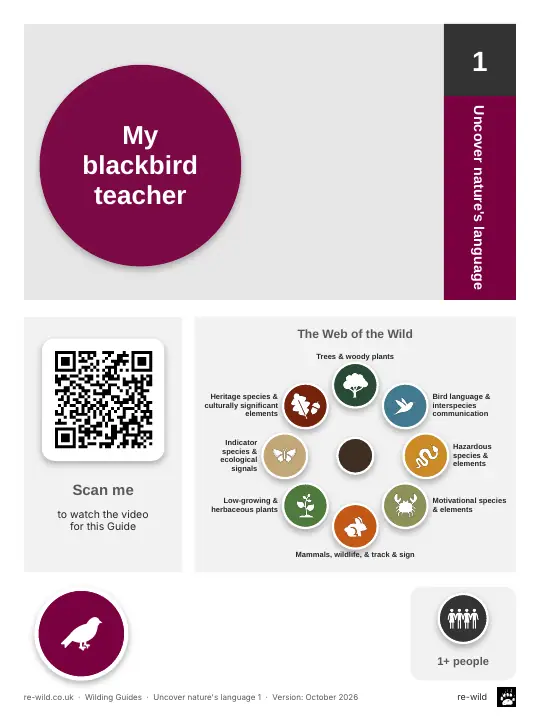
- Week 3My blackbird teacherLet one bird teach you its language
- Week 4Sit spot journalRecord what has changed


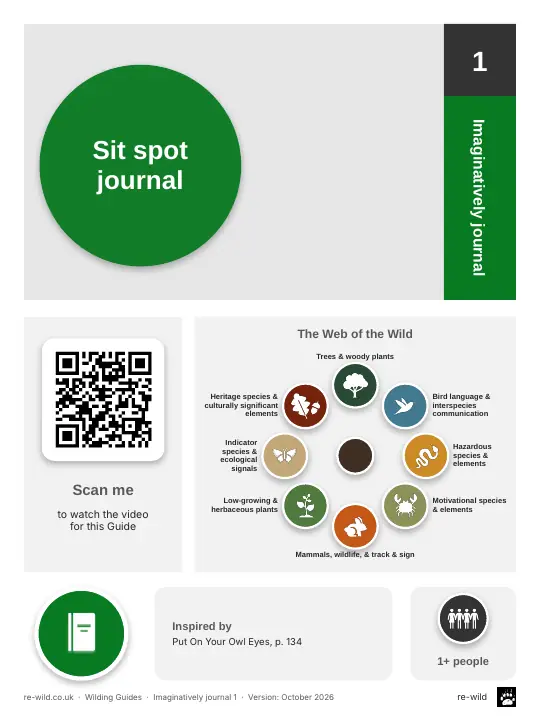
Read alongside: Wild Awake explains why sit spots and the senses work, and maps where to go next.
A mentoring path
For one adult and one young person
- StartThe red fox mentoring compassThe shape of good nature mentoring
- ThenPracticing ‘Notice’Help them noticeWonderAsk curious questions
- TogetherWho’s poo?A playful tracking mystery
- Keep goingInviteHand them the lead


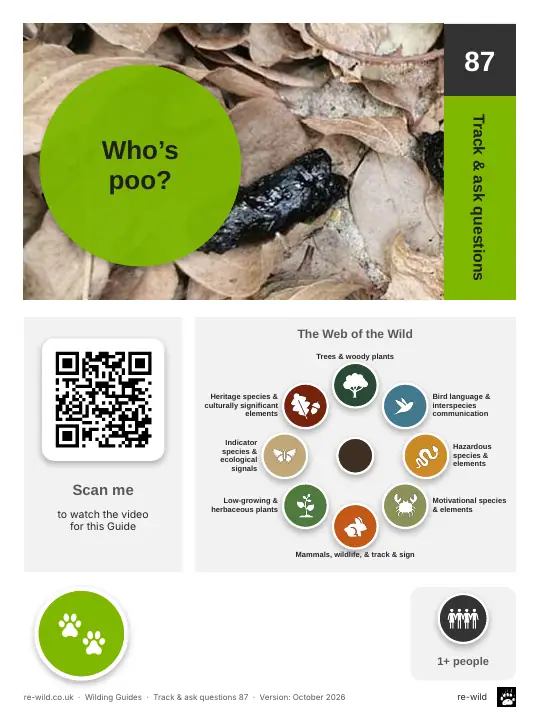

Read alongside: Wild Guide on mentoring from behind, with the Red Fox compass.
A group programme
For a family, class or youth group, six sessions
- 1Sharing circleOpen and close every session
- 2Fox walkingMove quietly, see more
- 3Building a debris shelterA team challenge
- 4Lighting a fire with childrenSafe fire, step by step
- 5Track detectiveWho passed by?
- 6Celebrating natureMark what you have shared


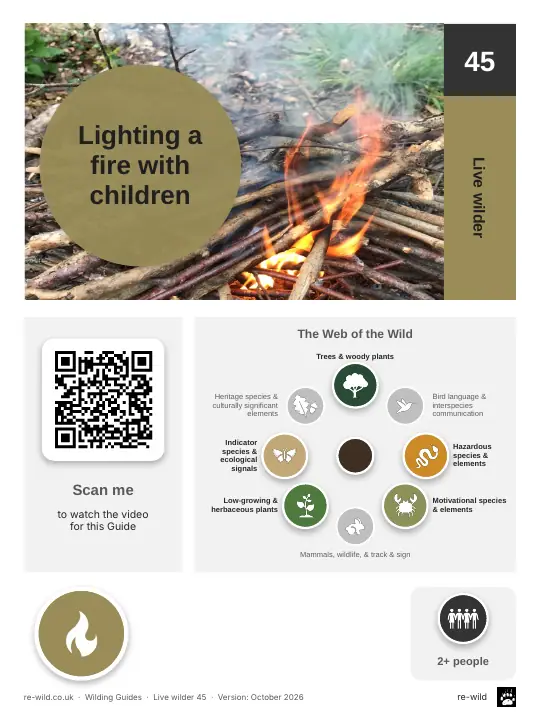

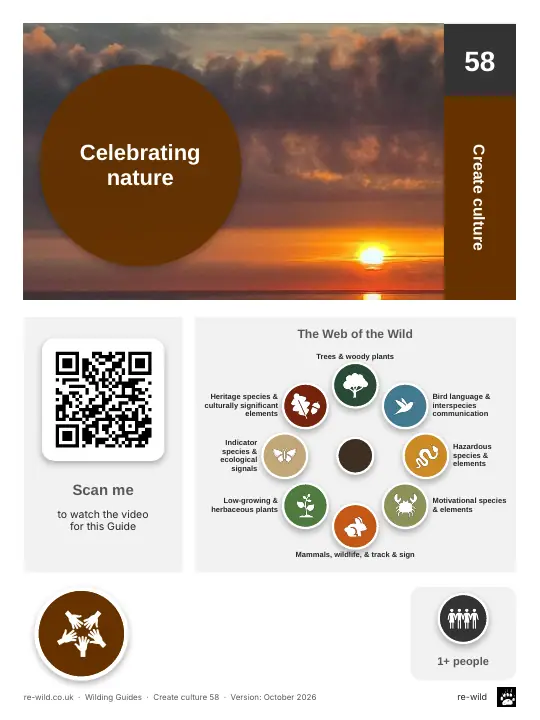
Read alongside: Wilder Together for growing a shared nature culture, or Wild Sparks for younger children.
How the Rucksack works together
Make your own: open the activity guides library, tap Save to my list on the ones you like, and build a journey that fits you.