
What is Wilding?
Wilding is my way of helping people build a lasting relationship with nature, with themselves and with each other, through three journeys and fifteen Practice Keys.
Three journeys, one connected life
Wilding is about reconnecting with nature, ourselves and each other through everyday practices, practical skills and shared culture.
It begins with awareness: slowing down, opening our senses and noticing the living world around us. The birdsong we usually walk past, the changing seasons, the life beneath our feet and the countless relationships that connect us to the natural world.
As our awareness grows, so can our curiosity, understanding and appreciation. We begin to recognise patterns, discover new skills, feel more at home outdoors and understand that we are not separate from nature, but part of it.
Wilding isn’t about becoming a wildlife expert, owning land or following a prescribed path. It’s about developing a relationship with the living world, one encounter at a time.
Know nature
Become more aware of the natural world. Notice, explore, ask questions and discover the richness of life all around you.
Live wilder
Bring nature into everyday life. Develop practical skills, follow your curiosity, spend time outdoors and find ways to live more closely with the seasons and the living world.
Pass it on
Share what you discover. Exchange stories, play, learn together and create opportunities for others to develop their own relationships with nature.
These journeys overlap and intertwine. There is no fixed starting point and no final destination. Wilding is a UK-centred interpretation of the 8 Shields model of nature connection developed by Jon Young and colleagues, reworked for British landscapes, species, seasons and culture.
You, at the centre of a living community
Wilding explores the relationships in a place through eight communities of species, elements and forces: trees, birds, low-growing plants, insects, mammals, heritage species, hazards and natural forces, and the species that motivate you. The more threads you notice, the stronger the web becomes.
Explore the Web of the Wild Explore the Practice Keys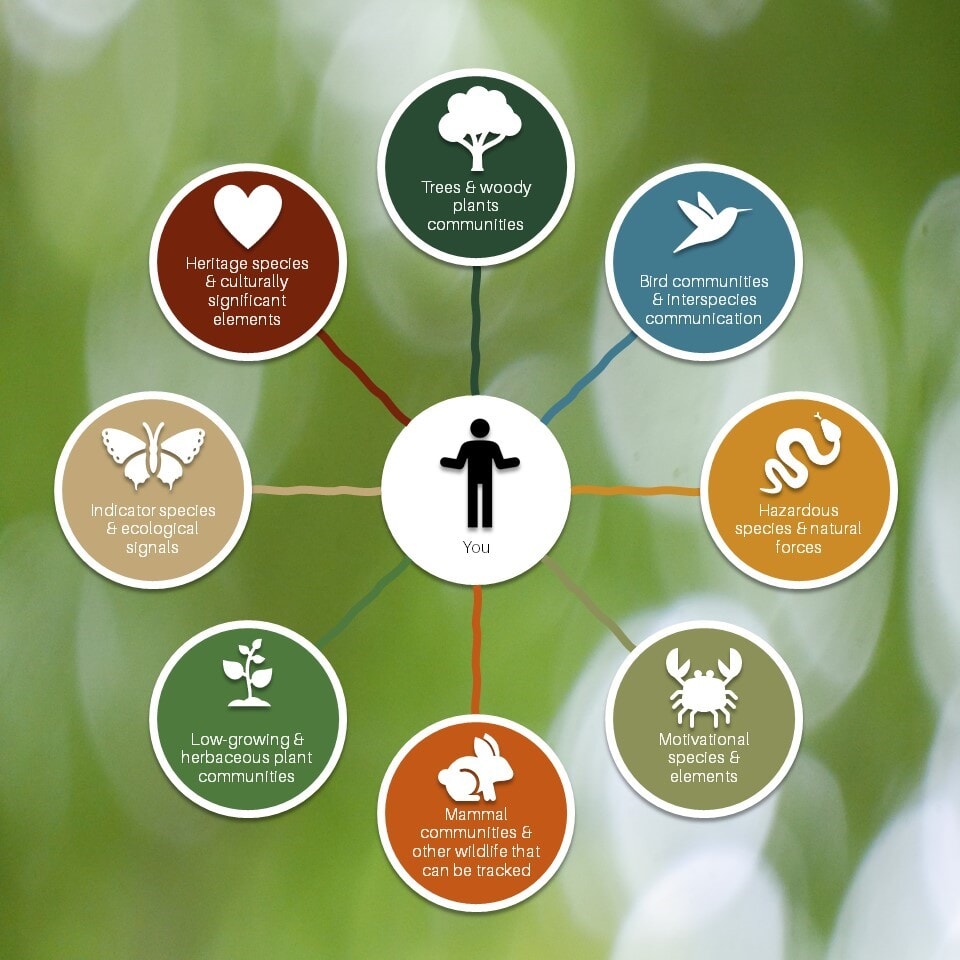 Trees & woody plant communitiesBird communities & interspecies communicationHazardous species & natural forcesMotivational species & elementsMammal communities & other wildlife that can be trackedLow-growing & herbaceous plant communitiesIndicator species & ecological signalsHeritage species & culturally significant elements
Tap any circle to step into that part of the web: who lives there, what to look for, and how to start.
Diagram source: adapted from the 8 Shields model of nature connection by Jon Young et al., in Coyote’s Guide to Connecting with Nature (Young, Haas and McGown, 2nd edition, 2016).
From visiting nature to belonging
Think of a friendship that begins in a coffee shop. At first you notice someone by the window. With repeated visits you begin to talk, share stories and recognise their moods. In time you notice their absence and care about their wellbeing.
Our relationship with nature grows in much the same way. Contact with nature is the beginning, not the destination: visiting becomes knowing a place, knowing becomes belonging, and belonging leads to care. That is nature connection, and it is what every part of Wilding is for.
- Visiting nature
- Knowing a place
- Belonging
- Caring for it
The 15 Wilding Practice Keys
The 15 Practice Keys offer different ways to connect with the natural world, develop awareness and deepen our understanding of the living web around us. Each key opens a different doorway into Wilding, providing opportunities to explore, learn, practise and share.
Together, they form a flexible framework. You can start with whichever key sparks your curiosity, follow your interests and return to different keys as your relationship with nature grows.
The keys aren’t a checklist or a series of steps to complete. They are invitations to engage with nature in different ways, build familiarity, nurture curiosity and develop meaningful connections with nature, ourselves and each other.
The first letters spell CULTIVATE WISDOM, making the keys easier to remember.
- Create Culture
- Uncover Nature’s Language
- Live Wilder
- Track & Ask Questions
- Imitate Nature
- Value Nature
- Awaken Your Mind’s Eye
- Tell Your Story
- Enjoy Your Sit Spot
- Wander
- Imaginatively Journal
- Support Nature
- Dive into Field Guides
- Open Your Senses
- Map & Navigate Naturally
Tap a key to find out what it is, and try it.
Each Practice Key is a way into a deeper relationship with nature. Pick one that calls to you and explore the Wilding activity guides that go with it.
 Create culture Wilding activity guidesUncover nature's language Wilding activity guidesLive wilder Wilding activity guidesTrack & ask questions Wilding activity guidesImaginatively journal Wilding activity guidesValue nature Wilding activity guidesAwaken your mind's eye Wilding activity guidesTell your story Wilding activity guidesEnjoy your sit spot Wilding activity guidesWander Wilding activity guidesImitate nature Wilding activity guidesSupport nature Wilding activity guidesDive into field guides Wilding activity guidesOpen your senses Wilding activity guidesMap & navigate naturally Wilding activity guides
Your Wilding journey
Each Wilding book is a stop on the path. Start anywhere, go alone or with family and friends, return, branch off and try again. There is no fixed route.
 Wilding: Wisdom for a Wilder Life →Wild Awake →Everyday Wilder Living →Wild Wise →A Walk in the Wild →The Invisible Wild →Wild Crafts →Food from the Fire →Supporting Nature →Venture Further →Wild Ancestor →Wild Sparks →Wild Guide →Wilder Together →
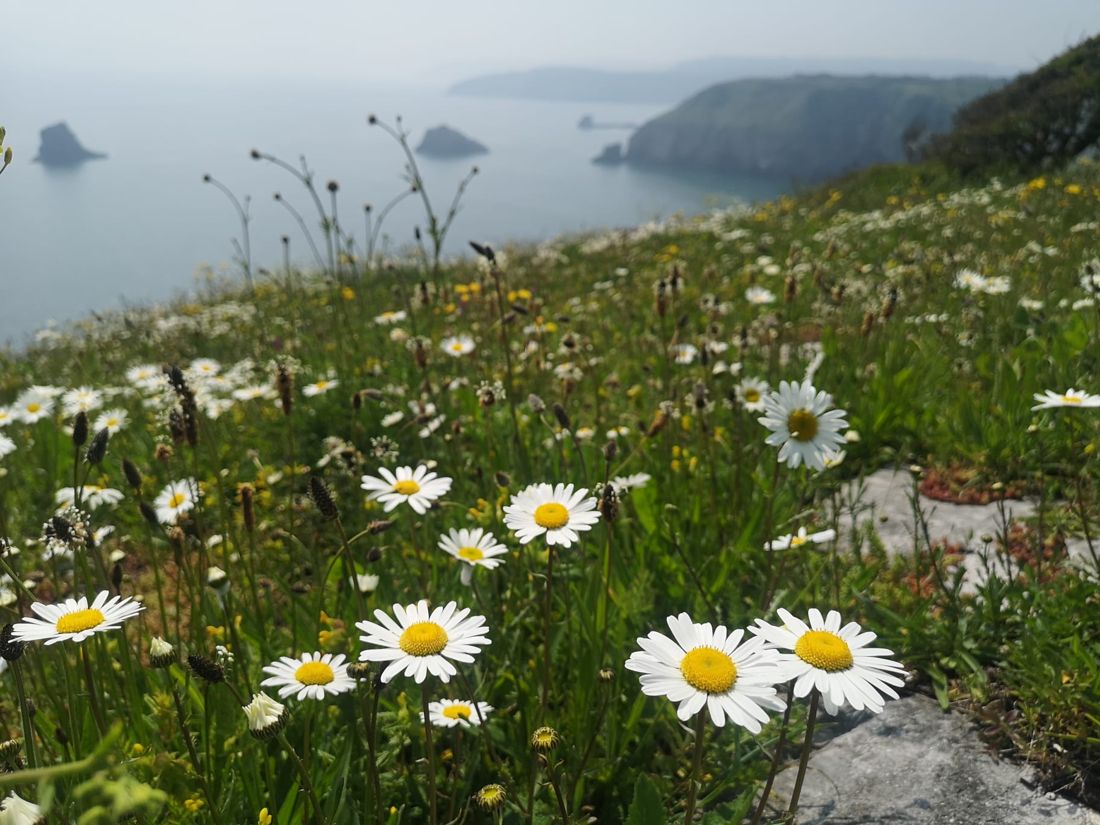
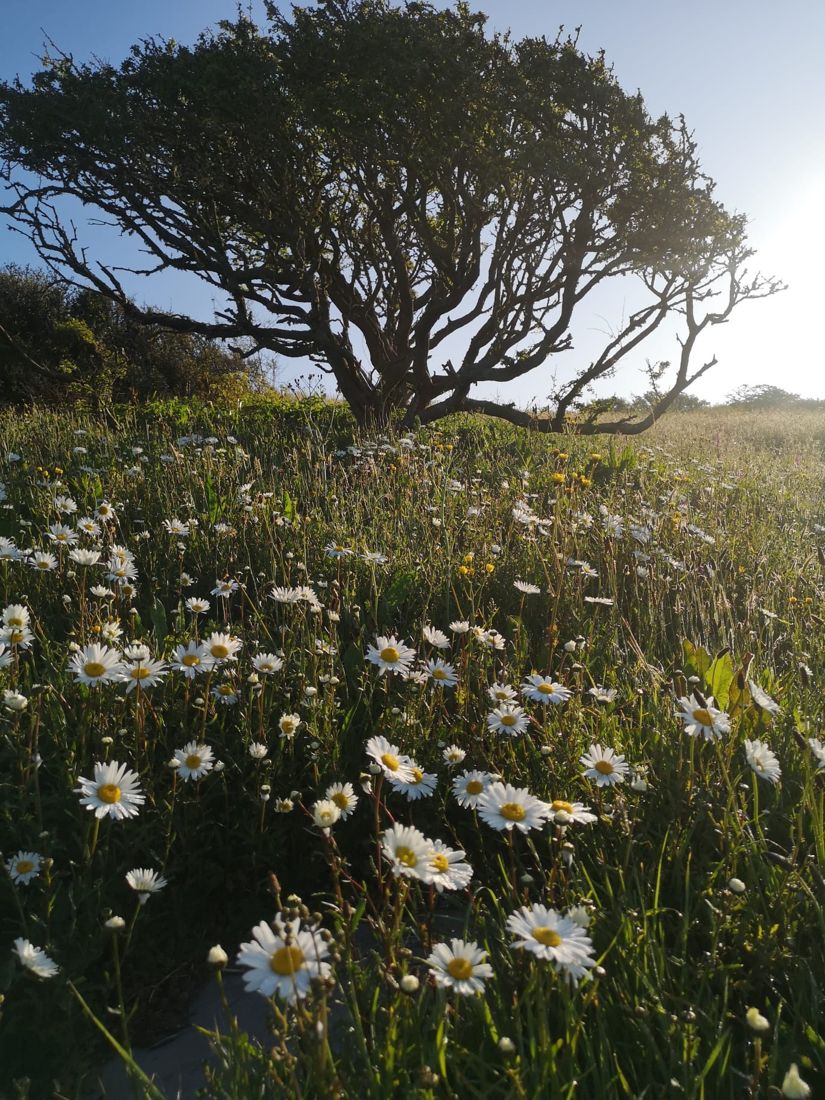
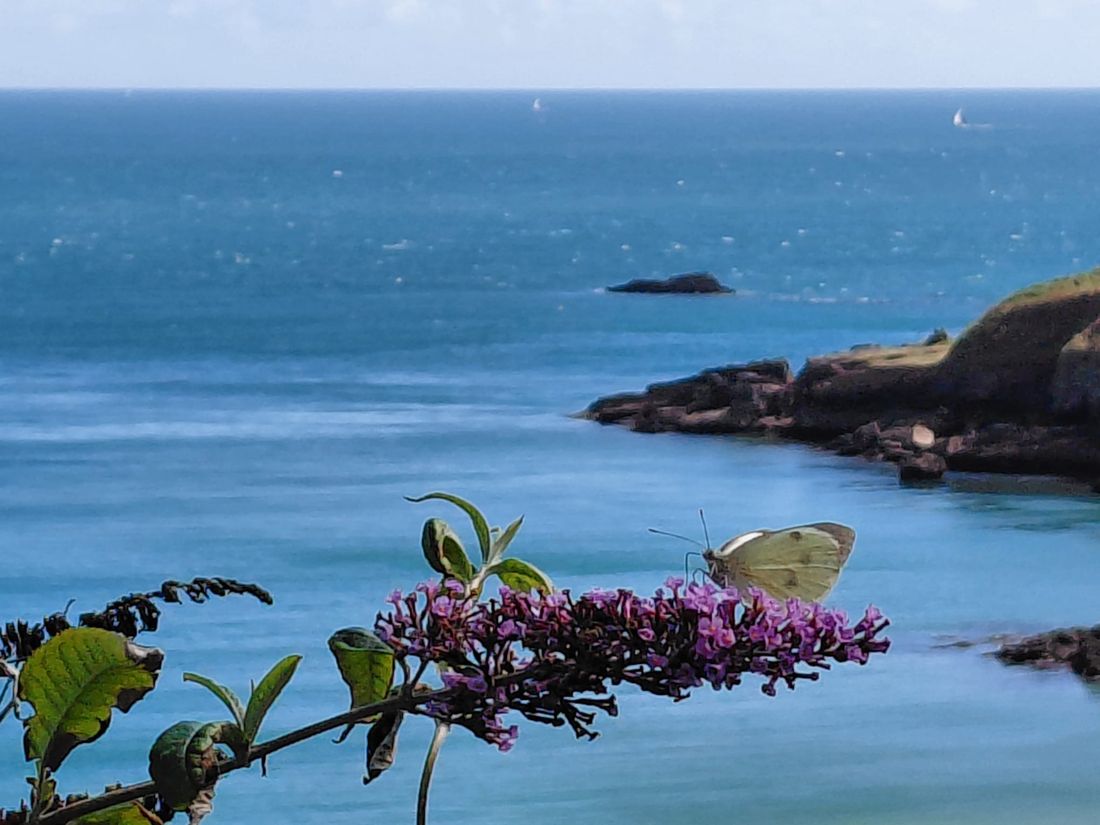
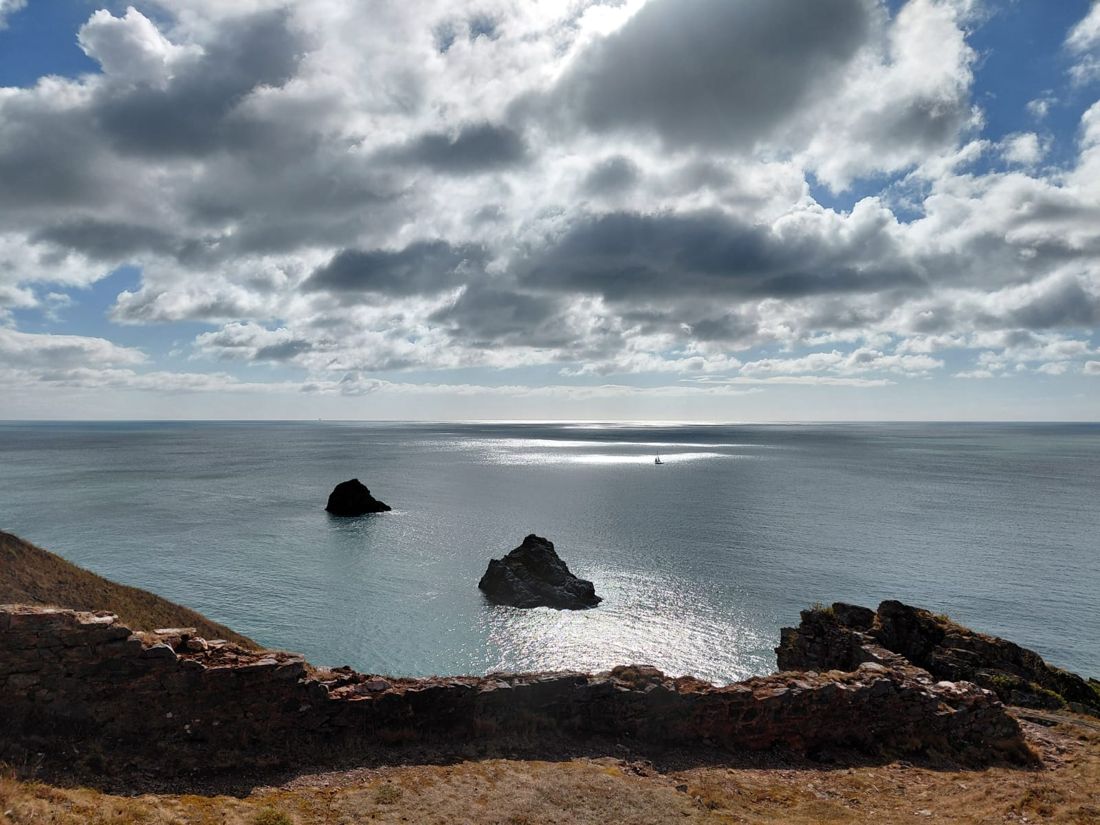
Where Jay walks: the South Devon coast

Where should I start? Which book first
Where should I start?
The Wilding ebooks are doorways: places where you can step onto your wilding journey. The Practice Keys open the doors. There is no fixed route, but here are some good first steps.
Know nature
If you want to know nature, Wild Awake is the ideal first step. Drawn to tracks, signs and bird language? You could start with The Invisible Wild instead.
Live wilder
If your curiosity is Wild Crafts, start with Everyday Wilder Living for tool skills and knowledge, then wander into A Walk in the Wild for gathering skills. Wild Wise, a cleverly woven web of learning and discovery, helps all the way.
Pass it on
You can start passing it on at any time, through Wild Guide.
Families & groups
If you work with families or groups of adults and/or children, try Wilder Together or Wild Sparks. Wild Awake is a useful first step too.
Find a Wilding activity guide by Practice Key
Find a Wilding activity guide.
 Create cultureMake nature part of everyday life with the people around you.
 Uncover nature's languageLearn what the birds are telling each other, and you.
 Live wilderShelter, fire, tools, wild food and crafts.
 Track & ask questionsRead the stories left in mud, snow and nibbled nuts.
 Imitate natureMove, hide and play like the animals.
 Value natureGratitude, respect and care for the living world.
 Awaken your mind's eyeSee it again with your eyes closed.
 Tell your storyShare the day's adventures around the hearth.
 Enjoy your sit spotReturn to one wild place until it starts to know you.
 WanderFollow your curiosity instead of a route.
 Imaginatively journalKeep what you notice in words, sketches and maps.
 Support natureGive back with habitats, planting and citizen science.
 Dive into field guidesPut names to your neighbours, and know what is safe.
 Open your sensesWake up sight, sound, smell, touch and intuition.
 Map & navigate naturallyFind your way by sun, stars and the lie of the land.
Choose your way in
Start with the journey that fits you, or browse every Wilding activity guide.
A growing library
The Wilding Rucksack is a growing library of more than 800 Wilding activity guides and associated resources, mapped to the 15 Practice Keys. They provide practical activities, skills, ideas and inspiration for your own exploration, or to help you share experiences with others.
The guides support Wilding; they are not Wilding itself. Wilding is the wider journey of awareness, connection and relationship that these resources can help nurture.
Connection grows over time
A single encounter with nature can spark curiosity. Returning to a place, noticing changes and learning more can turn that first encounter into familiarity.
Over time, many small experiences weave together like threads, growing into strands and stronger ropes of relationship, understanding and belonging: towards the natural world, towards ourselves, and towards the people we share it with. There is no need to rush.
Wilding starts where you are
You don’t need specialist knowledge, expensive equipment or a remote wilderness. Start with what’s around you. Follow your curiosity. Make room for wonder.
Know nature. Live wilder. Pass it on.