
Web of the Wild: Motivational species & elements · Indicator species & ecological signals
New to Wilding activity guides? See how they work →
Dive into field guides
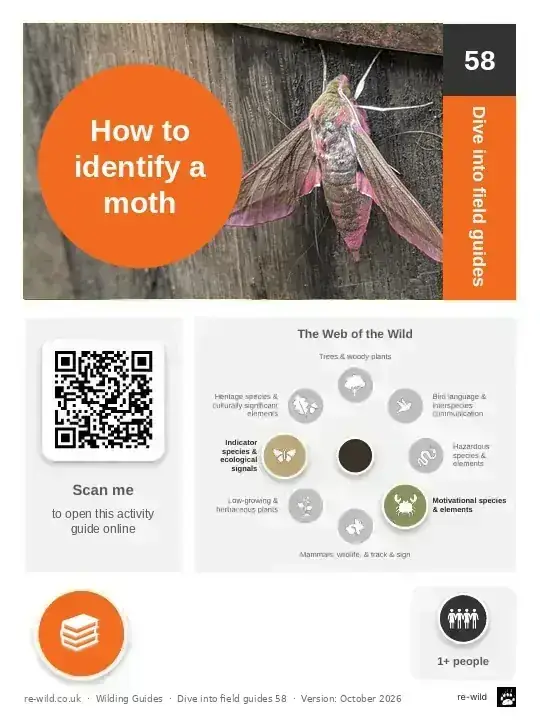
How to identify a moth
For day flying moths, visit a meadow, garden or woodland edge during daylight and look for moths nectaring on flowers, resting on leaves, or flying low over the ground.
Connects you to
 Dive into field guides
- Web of the Wild: Motivational species, Indicator species
- 1+ people
- Ages 8+


Planning details
- Age guidance
- Suggested 8+; adults suitable unless method held
- Who takes part
- On your own; helpers, companions or shared roles where appropriate; group variants optional
- Time
- About 20–30 minutes, plus setup, travel and any return visits.
- Where
- Woodland / woody habitat; Garden / school grounds; Meadow / open ground
- When
- No season specified; check local availability
Also in the collections: Wild Wise
Inside this Wilding activity guide
- At a glance
- Step by step
- Questions to wonder about
- Tip
- Variations
- Resources
- Learning
- Practising over time
- Safety notes
A printable PDF, with any templates or charts it needs.
Coming soon. Jay is giving the Wilding activity guides a final proofread before they go on sale as downloads. Ask to be told when they’re ready.
Safety first. Outdoor activities carry real risks. Each Wilding activity guide has safety notes, but you are responsible for yourself and anyone in your care. Supervise children, get permission, never eat anything you cannot identify with certainty, and only light fires where it is allowed and safe.